






What's Happening?
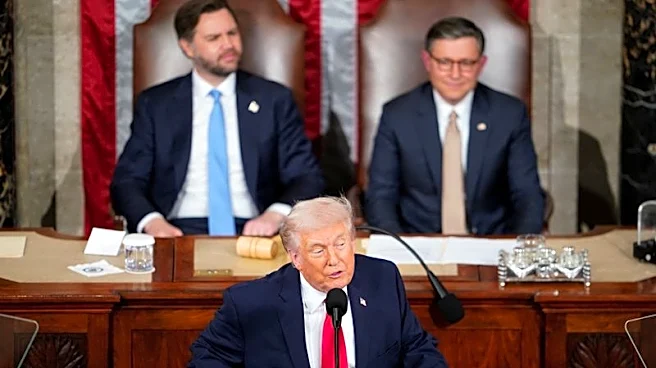
President Trump faced a significant political setback as the House of Representatives passed a measure under the 1973 War Powers Resolution, directing the White House to remove U.S. forces from hostilities against Iran. This move follows a similar vote
in the Senate, where some Republican lawmakers supported the resolution. The measure reflects growing bipartisan concern over the ongoing conflict with Iran, which has resulted in American casualties and economic repercussions. Despite Trump's previous success in rallying Republican support on foreign policy issues, this development indicates a shift in congressional sentiment.
Why It's Important?
The passage of the War Powers Resolution measure highlights a critical moment in U.S. foreign policy, as it challenges the executive branch's authority to engage in military actions without congressional approval. The bipartisan support for the resolution underscores the increasing unease among lawmakers regarding the prolonged conflict with Iran and its impact on American lives and the economy. This development could signal a broader shift in congressional oversight of military engagements, potentially influencing future U.S. foreign policy decisions and the balance of power between the legislative and executive branches.
What's Next?
While the resolution lacks the force of law, its passage represents a significant political statement. The Senate is expected to consider its version of the resolution, and further Republican defections could occur. The outcome of these legislative efforts may pressure President Trump to reassess his approach to the conflict with Iran. Additionally, the resolution's passage could influence the upcoming midterm elections, as lawmakers seek to align with public sentiment against the war. The evolving political landscape may also affect U.S.-Iran relations and the administration's strategy in the Middle East.
Beyond the Headlines
The resolution's passage reflects broader concerns about the executive branch's military authority and the need for congressional oversight. Historically, presidents have sought congressional approval for military actions, but recent administrations have often bypassed this process. The current situation with Iran highlights the complexities of modern warfare and the challenges of maintaining checks and balances in foreign policy. As the U.S. navigates its role on the global stage, the resolution serves as a reminder of the importance of democratic accountability in military engagements.