

What's Happening?
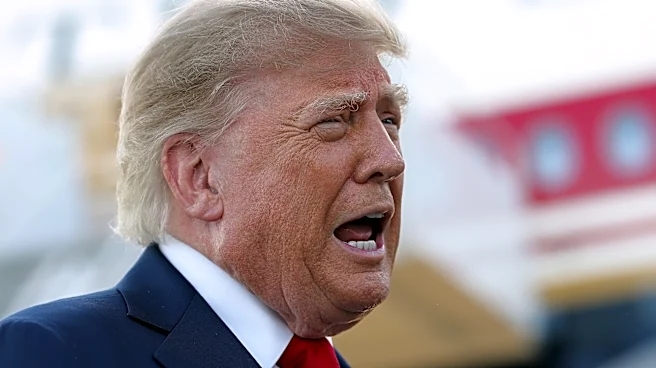
CNN was excluded from traveling on Air Force One for President Trump’s upcoming trip to Knoxville, Tennessee, where he is scheduled to attend a college football game. This decision, announced by the White House, marks the latest development in an ongoing
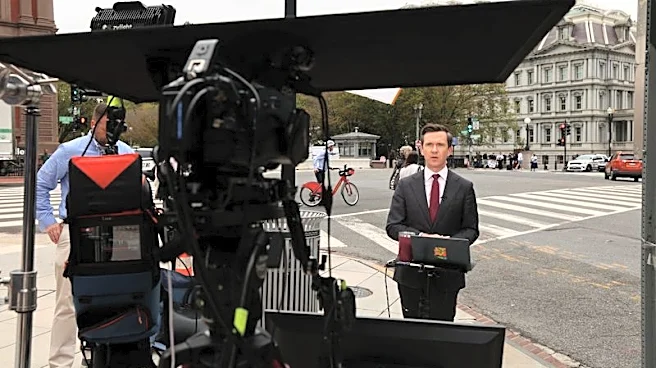
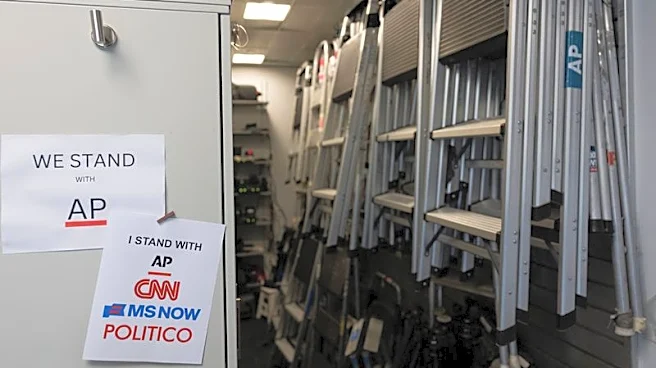
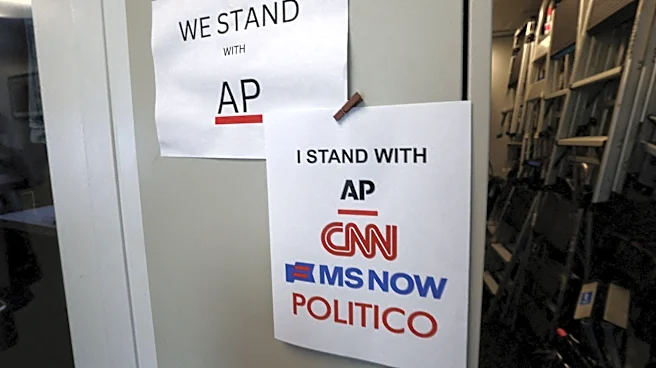
dispute between the administration and certain media outlets regarding press access. Real America’s Voice News, a conservative network, was selected to replace CNN for the trip. This exclusion follows a temporary reprieve granted by U.S. District Judge Timothy Kelly, which allowed journalists from CNN, MS NOW, and Politico to return to the White House grounds after being previously banned. However, Judge Kelly’s ruling specifically addressed 'hard passes' to the White House grounds and did not directly cover reporting pool duties or access to Air Force One.
Why It's Important?
The exclusion of CNN from Air Force One raises significant concerns about press freedom and the role of a free press in a democratic society. The White House's decision to replace a major news organization with a network perceived as more favorable to the administration could be seen as an attempt to control the narrative and limit independent reporting on presidential activities. This action impacts the public's right to receive diverse and unfiltered information about the President's actions and statements. For the U.S. media landscape, it sets a precedent that could further strain relations between the executive branch and news organizations, potentially leading to increased polarization and distrust in the press. The ongoing dispute also highlights the challenges faced by journalists in maintaining access and accountability, particularly when covering high-profile political figures.
What's Next?
The exclusion of CNN from Air Force One is likely to intensify the ongoing legal and political battle over media access to the White House. CNN and other affected news organizations may explore further legal avenues to challenge such restrictions, arguing that they impede the press's ability to cover the President effectively. Media advocacy groups and First Amendment proponents are expected to voice strong opposition, emphasizing the importance of an independent press. The White House may continue to assert its prerogative in determining press access, potentially leading to further selective exclusions or changes in press pool arrangements. This situation could also prompt a broader discussion within Congress and among the public about the appropriate balance between presidential control over media access and the constitutional guarantees of a free press, potentially influencing future media policies and guidelines for covering the executive branch.
Beyond the Headlines
This incident transcends a simple dispute over media access, touching upon fundamental principles of democratic governance and the evolving relationship between political power and the press. The selective exclusion of news outlets from presidential travel raises questions about transparency and accountability, suggesting a potential shift towards a more controlled information environment. It also highlights the increasing weaponization of media access as a political tool, where favorable coverage is rewarded and critical reporting is penalized. This trend could erode public trust in both government institutions and the media, fostering an environment where citizens struggle to discern objective truth. Furthermore, the incident underscores the vulnerability of traditional journalistic practices in an era of heightened political polarization and the proliferation of partisan news sources, prompting a reevaluation of how the press can effectively fulfill its watchdog role in a fragmented media landscape.