



What's Happening?
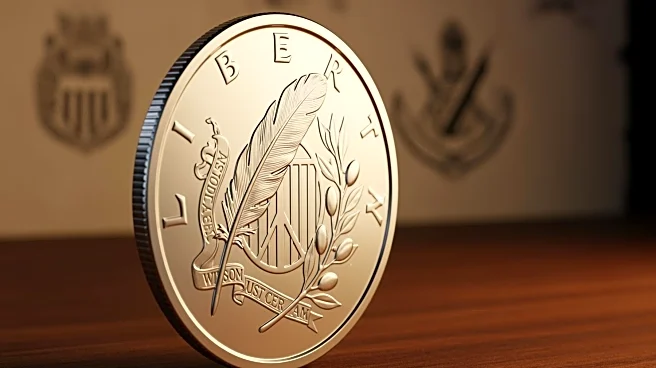
The U.S. Mint has released a new Sacagawea $1 coin featuring Polly Cooper, an Oneida woman recognized for her aid to George Washington's Continental Army during the Revolutionary War. This release is part of the Native American $1 Coin Program, which
commemorates significant Native American figures and events. Cooper is celebrated for her role in a 1778 relief mission where she, along with 47 Oneida warriors, delivered white corn to the starving troops at Valley Forge, Pennsylvania. Her intervention in teaching the soldiers to properly prepare the corn prevented illness. The coin's design, developed in collaboration with the Oneida Indian Nation, depicts Cooper offering a basket of corn to Washington. The program, established by Congress in 2007, has previously honored figures like Sacagawea and Jim Thorpe, as well as historical events such as the 1778 treaty with the Delaware.
Why It's Important?
This coin release highlights the often-overlooked contributions of Native Americans to U.S. history, particularly during the Revolutionary War. Polly Cooper's story exemplifies the critical support provided by the Oneida tribe, which aligned with the Continental Army at great personal cost. The recognition through the coin program serves to educate the public about these contributions and the complex history of Native American alliances during the formation of the United States. It also underscores ongoing efforts to acknowledge and honor the diverse narratives that have shaped the nation. The program's continuation, despite some design cancellations under President Trump's administration, reflects a commitment to preserving and promoting Native American heritage.
What's Next?
The release of the Polly Cooper coin coincides with the 250th anniversary of the Declaration of Independence, suggesting further commemorative activities and educational initiatives may follow. The U.S. Mint and the Oneida Indian Nation may continue to collaborate on future projects that highlight Native American history. Additionally, there may be discussions on expanding the program to include more diverse figures and events, potentially influencing public perception and policy regarding Native American contributions to U.S. history.
Beyond the Headlines
The coin's release also brings attention to the broader historical context of Native American involvement in the Revolutionary War and the subsequent impact on their communities. The Oneida's alliance with the Continental Army led to significant sacrifices, including population loss and land seizures. This narrative challenges simplified historical accounts and encourages a more nuanced understanding of the complex relationships between Native Americans and early American settlers. The coin serves as a reminder of the need for continued dialogue and reconciliation regarding historical injustices faced by Indigenous peoples.