
What's Happening?
The Trump administration has successfully mediated a ceasefire agreement between Israel and Lebanon. The deal requires Hezbollah to cease its attacks and withdraw from southern Lebanon, allowing the Lebanese
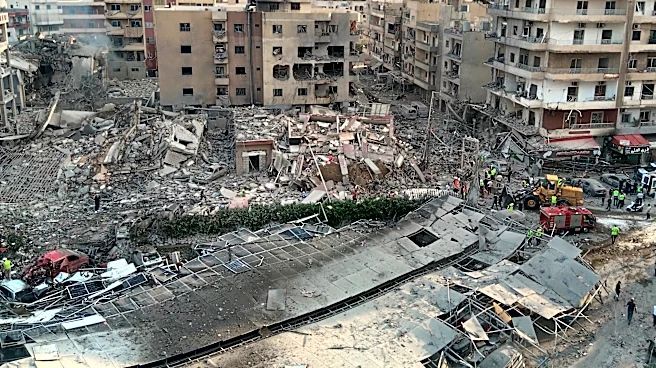
Armed Forces to take control of the area. The agreement follows two days of talks in Washington and aims to pave the way for a comprehensive peace treaty. Despite the ceasefire, tensions remain high, with ongoing Israeli military operations in Lebanon. The U.S. continues to play a central role in facilitating negotiations between the two countries.
Why It's Important?
The ceasefire represents a significant diplomatic achievement for the Trump administration, highlighting its influence in Middle Eastern affairs. The agreement seeks to curb Hezbollah's activities and reduce Iran's regional influence, aligning with U.S. strategic interests. However, the exclusion of Hezbollah from the talks raises questions about the ceasefire's sustainability. The ongoing conflict poses risks to regional stability and could impact U.S.-Iran relations, particularly as Tehran demands an end to Israeli operations in Lebanon as part of broader peace negotiations.
What's Next?
Israel and Lebanon are scheduled to continue negotiations later in June, with the U.S. mediating the talks. The success of the ceasefire depends on Hezbollah's compliance and the Lebanese military's ability to maintain control in the designated zones. Potential reactions from Iran and Hezbollah could influence the agreement's durability. The international community will monitor the situation closely, as any escalation could affect regional stability and U.S. diplomatic efforts in the Middle East.