




What's Happening?
The U.S. House of Representatives has overwhelmingly passed the 'AM Radio for Every Vehicle Act of 2025,' a bipartisan bill that would require new passenger vehicles to include AM radio. This legislative action comes despite significant opposition from
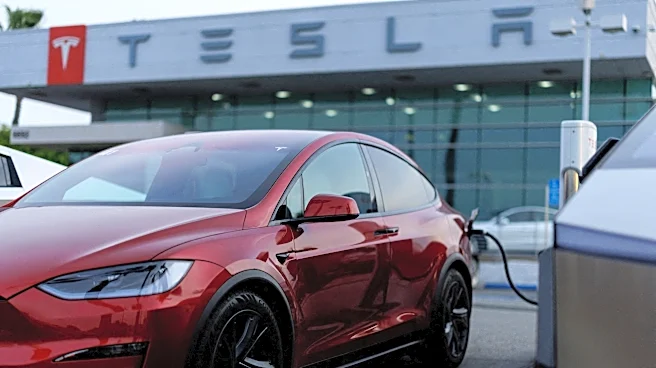
car manufacturers, some of whom, including BMW, Mazda, Tesla, and Volkswagen, have already stopped installing AM radio in their electric vehicle models over the past decade. The technology in electric vehicles can cause interference with AM radio waves, leading manufacturers to either invest in engineering solutions to reduce this interference or remove AM receivers entirely. Proponents of the bill argue that AM radio is a crucial safety feature, especially during emergencies when other communication technologies like the internet or streaming services may be unavailable. Broadcasters emphasize AM radio's ability to carry signals over long distances and its resilience during natural disasters, making it vital for the National Public Warning System. The bill now awaits a decision from the Senate.
Why It's Important?
The potential mandate for AM radio in new vehicles carries significant implications for public safety, communication infrastructure, and the automotive industry. Advocates, including former Federal Emergency Management Agency (FEMA) leaders, stress AM radio's role in disseminating emergency alerts, particularly in rural and remote areas where cellular service may be unreliable or non-existent. This is especially critical for communities like Native American tribal lands, where AM radio often serves as the primary source of information, including local news and cultural programming. For the automotive industry, the mandate represents a potential increase in manufacturing costs and a challenge to vehicle design, particularly for electric vehicles where AM radio interference is a known issue. Manufacturers argue against what they perceive as an unnecessary government intervention, citing the availability of alternative communication technologies and consumer preferences. The bill also touches on the broader debate about consumer choice versus public utility in technological integration.
What's Next?
The 'AM Radio for Every Vehicle Act of 2025,' having passed the House, now moves to the Senate for consideration. If it clears the Senate, it will then require presidential assent to become law. Should the bill be enacted, it would mandate AM radio in new passenger vehicles, with a sunset clause for the mandate ten years after its implementation. Additionally, the Government Accountability Office would be required to study and report on the dissemination of emergency alerts to the public. For car models manufactured without AM radios before the mandate takes effect, companies would be obligated to notify buyers through clear labeling and would be prohibited from charging a fee for AM radio access. The automotive industry is expected to continue its lobbying efforts against the mandate, while proponents will likely emphasize the public safety aspects to secure its passage.
Beyond the Headlines
This legislative effort highlights a deeper tension between technological advancement, consumer choice, and public welfare. While newer technologies offer diverse entertainment and information options, the debate underscores the enduring value of older, more resilient technologies like AM radio for critical functions, particularly emergency communication. The pushback from car manufacturers also reflects a broader trend of industries resisting government mandates that could impact design, cost, and innovation. The discussion extends to the digital divide, as AM radio often serves as a lifeline for communities with limited access to broadband or reliable cellular networks. The bill's outcome could set a precedent for how the U.S. government balances technological progress with the need to maintain accessible and robust public safety infrastructure, especially in an increasingly interconnected yet vulnerable world.