



What's Happening?
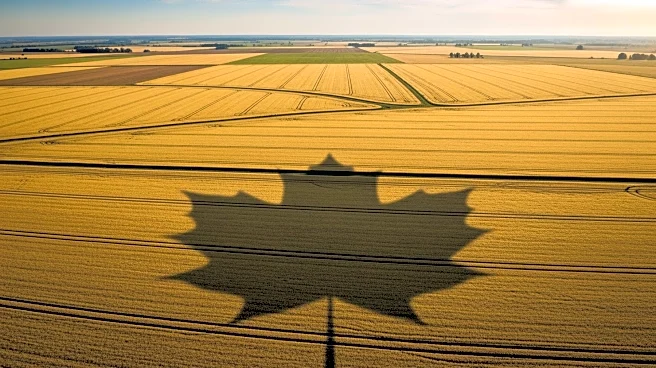
Canada has become the largest foreign holder of U.S. agricultural land, controlling over 15.35 million acres, which accounts for approximately 33% of all foreign-held agricultural land in the United States. This revelation comes amidst growing concerns
about foreign ownership of U.S. farmland, particularly near sensitive military installations and critical infrastructure. The concentration of foreign ownership is not uniform across the states, with Texas leading with over 5.7 million acres under foreign control, followed by Maine, Colorado, Alabama, and Oklahoma. The U.S. Department of Agriculture reports that foreign entities own more than 45 million acres of U.S. agricultural land valued at over $38 billion. While Canada, the Netherlands, and Italy are the largest holders, their ownership rarely causes a stir due to their status as long-standing allies.
Why It's Important?
The significant foreign ownership of U.S. farmland raises several concerns. National security is a primary issue, as lawmakers fear potential surveillance or interference near sensitive sites. Economic access is another concern, as foreign investors with more capital can inflate land prices, creating barriers for first-generation U.S. farmers. Additionally, food sovereignty advocates worry that foreign control over the supply chain could leave the U.S. vulnerable during trade wars or global disruptions. These factors could impact U.S. agriculture, rural communities, and national security policies, prompting discussions on regulatory measures to address these challenges.