

What's Happening?
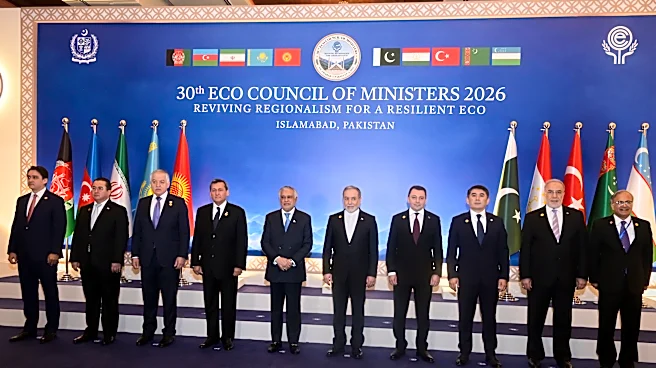
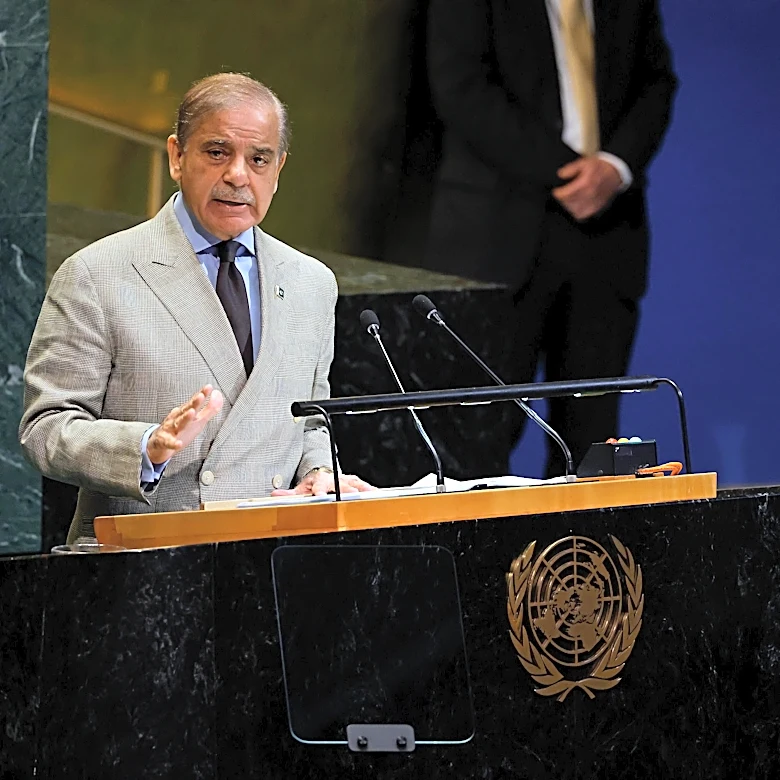
Pakistan's Foreign Minister Ishaq Dar announced that Pakistan will continue its diplomatic efforts to de-escalate tensions between the United States and Iran. This commitment was made during a meeting of the Economic Cooperation Organization (ECO) in Islamabad,
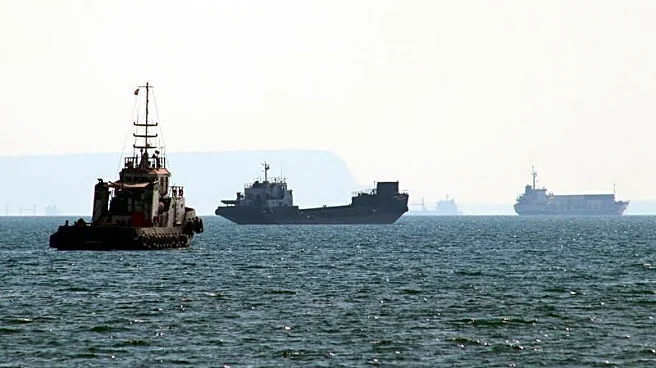
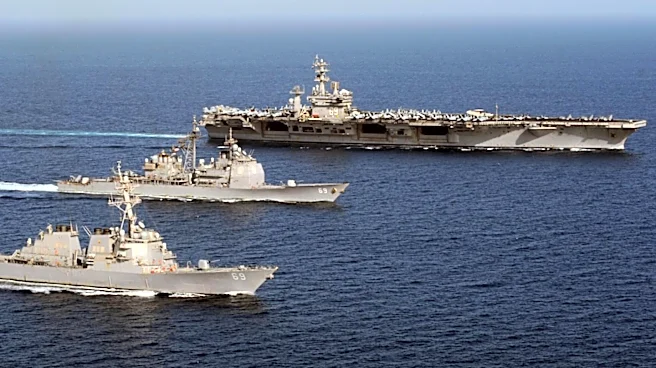
attended by foreign ministers and senior diplomats from several Asian countries, including Iran. Dar emphasized that peace and stability are crucial for economic development in the region. He also stated that improved relations with Afghanistan are contingent upon the Afghan Taliban government taking concrete actions to curb terrorism. Tensions between Pakistan and Afghanistan have intensified this year due to repeated border clashes and Pakistani airstrikes, stemming from a long-standing dispute over militant activities. Pakistan has previously hosted direct talks between the U.S. and Iran, leading to an interim deal in June to resolve the conflict over the Strait of Hormuz. Dar highlighted Pakistan's consistent advocacy for peaceful dispute resolution through dialogue and international law.
Why It's Important?
Pakistan's diplomatic initiative to mediate between the U.S. and Iran holds significant implications for regional stability and global energy markets. The closure of the Strait of Hormuz, a critical waterway, has historically led to sharp increases in oil prices, impacting economies worldwide, including Pakistan's. By actively seeking de-escalation, Pakistan aims to safeguard trade routes, energy supplies, and investment, which are vital for the economic projects of ECO member states. Furthermore, Pakistan's insistence on the Afghan Taliban government addressing terrorism is crucial for regional security. The ongoing militant activity and border clashes between Pakistan and Afghanistan pose a direct threat to stability, potentially disrupting trade and fostering an environment unconducive to economic growth. The success of these diplomatic efforts could lead to a more secure and economically integrated region, benefiting all stakeholders by reducing geopolitical risks and fostering a predictable environment for commerce and investment.
What's Next?
Pakistan is expected to continue its diplomatic engagements to facilitate dialogue between the U.S. and Iran, aiming for a lasting resolution to their tensions. The focus will also remain on pressuring the Afghan Taliban government to address Pakistan's security concerns regarding militant groups operating from Afghan soil. Future ECO meetings will likely continue to prioritize regional cooperation, particularly in trade and commerce, with an emphasis on strengthening transportation and trade links among member countries. The effectiveness of these diplomatic efforts will depend on the willingness of all parties to engage constructively and implement agreements. The international community will be closely watching for tangible steps from the Afghan Taliban to curb terrorism, as this is a key condition for improved bilateral ties with Pakistan and broader regional stability.
Beyond the Headlines
The ongoing diplomatic efforts by Pakistan underscore a broader shift in regional dynamics, where economic imperatives are increasingly driving foreign policy. Pakistan's role as a mediator between major powers like the U.S. and Iran, alongside its firm stance on terrorism emanating from Afghanistan, reflects a strategic balancing act. This approach aims to position Pakistan as a responsible regional actor, capable of fostering stability while protecting its own economic and security interests. The emphasis on dialogue and de-escalation also highlights the interconnectedness of security and economic development in a volatile region. The long-term success of these initiatives could redefine regional alliances and trade corridors, potentially leading to a more integrated and prosperous South and Central Asia, provided that underlying political and security challenges are effectively managed through sustained diplomatic engagement and cooperation.