





What's Happening?
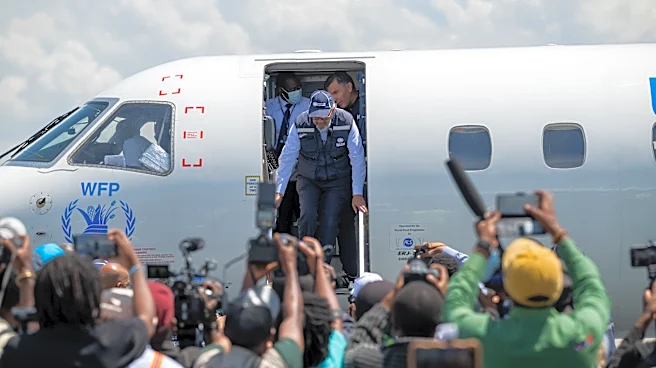
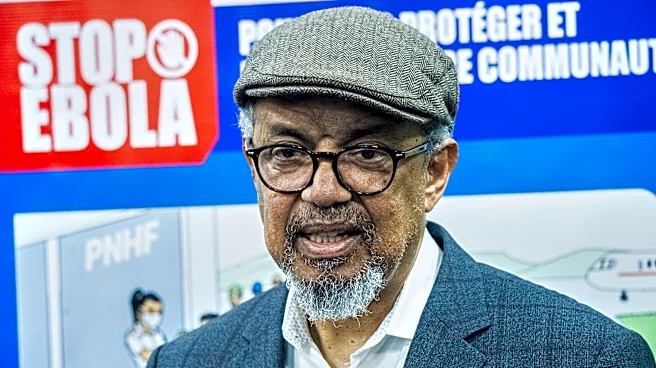
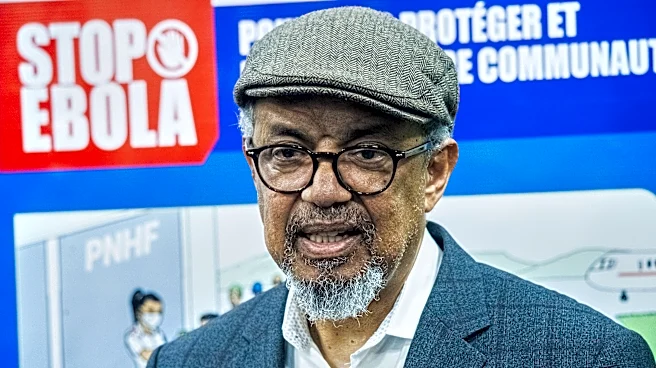
The World Health Organization (WHO) has called for community cooperation to address the Ebola outbreak in the Democratic Republic of Congo (DRC). Tedros Adhanom Ghebreyesus, WHO's director general, emphasized the importance of collective action during
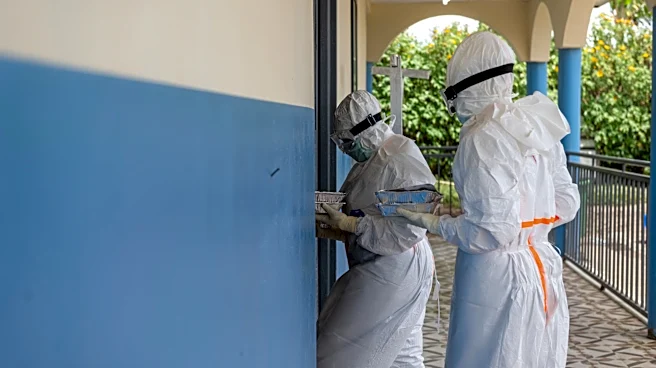
his visit to eastern Congo, where protests have arisen against medical protocols for handling victims' bodies. The outbreak, centered in Ituri province, has seen resistance due to cultural burial practices. Despite the lack of a vaccine for the Bundibugyo virus strain, recovery is possible with early medical intervention. The outbreak has resulted in 906 suspected cases and 223 suspected deaths in the DRC, with neighboring Uganda confirming nine cases and one death. The situation is further complicated by regional conflicts, prompting calls for a ceasefire to facilitate relief efforts.
Why It's Important?
The Ebola outbreak in the DRC poses significant challenges to public health and regional stability. The WHO's declaration of the outbreak as a public health emergency of international concern underscores the potential for widespread impact. The involvement of international aid, including $80 million from the U.S., highlights the global stakes in containing the virus. The outbreak's persistence threatens to strain healthcare systems and disrupt local economies, particularly in conflict-affected areas. Effective containment requires alignment with African strategies, as emphasized by Jean Kaseya of the Africa Centres for Disease Control and Prevention. The outbreak's rapid spread and high mortality rate necessitate urgent and coordinated action to prevent further loss of life and economic disruption.
What's Next?
Efforts to contain the Ebola outbreak will likely focus on increasing international aid and enhancing local healthcare infrastructure. The WHO's call for community involvement suggests a need for cultural sensitivity in medical protocols, which may require negotiation with local leaders. The ongoing conflict in Ituri province presents a barrier to effective response, necessitating diplomatic efforts to secure a ceasefire. Monitoring of potential cases in Brazil indicates the outbreak's international implications, prompting global vigilance. Continued investment in pandemic preparedness and rapid activation of national incident systems are critical to managing the outbreak's impact and preventing future occurrences.
Beyond the Headlines
The Ebola outbreak in the DRC highlights broader issues of healthcare access and cultural practices in epidemic response. The protests against burial protocols reflect the tension between public health measures and local traditions, necessitating culturally informed approaches. The outbreak also underscores the importance of international cooperation in addressing global health emergencies, with the alignment of aid strategies to local needs being crucial. The situation in the DRC serves as a reminder of the interconnectedness of health, conflict, and economic stability, with implications for global health policy and humanitarian efforts.