
What's Happening?
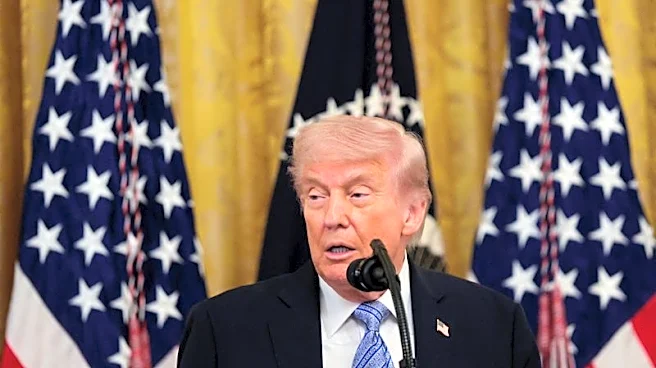
President Trump has been actively using his social media platform, Truth Social, to communicate with the public, posting an average of 19 times per day in the first four months of 2026. His posts cover
a wide range of topics, from personal projects like his proposed White House ballroom to international issues such as the ongoing conflict with Iran. Despite the serious nature of some topics, many of his posts focus on personal grievances and criticisms of perceived opponents. NPR's analysis of these posts reveals a president with a scattered focus, often prioritizing personal vendettas and projects over pressing policy matters. The platform serves as a direct line of communication for Trump, allowing him to bypass traditional media channels.
Why It's Important?
The use of Truth Social by President Trump underscores a significant shift in how political leaders communicate with the public. By using a platform he controls, Trump can directly influence public discourse without the filter of traditional media. This approach allows him to maintain a strong connection with his base, but it also raises concerns about the spread of misinformation and the impact of his unfiltered messages on public opinion and international relations. The focus on personal grievances and projects rather than policy issues could affect the administration's ability to address critical national and international challenges effectively.
What's Next?
As President Trump continues to use Truth Social as his primary communication tool, it is likely that his posts will continue to shape public discourse and influence political dynamics. The platform's role in the upcoming 2026 elections could be significant, as Trump uses it to endorse candidates and promote his political agenda. Observers will be watching to see how this direct communication strategy impacts voter behavior and the broader political landscape. Additionally, the potential for misinformation and the president's focus on personal issues may prompt further scrutiny and debate about the role of social media in politics.
Beyond the Headlines
The reliance on Truth Social highlights broader questions about the role of social media in modern governance. The platform's ability to amplify the president's voice without traditional media oversight raises ethical and legal concerns, particularly regarding the spread of misinformation and the potential for inciting violence or diplomatic tensions. The situation also reflects a cultural shift towards more personalized and direct communication from political leaders, which could have long-term implications for how political campaigns and governance are conducted in the digital age.