







What's Happening?
The Colorado School of Mines recently hosted its inaugural nuclear energy symposium, which focused on the comprehensive nuclear energy ecosystem, including reactors, the nuclear fuel cycle, social license, and workforce development. A key highlight of the symposium was
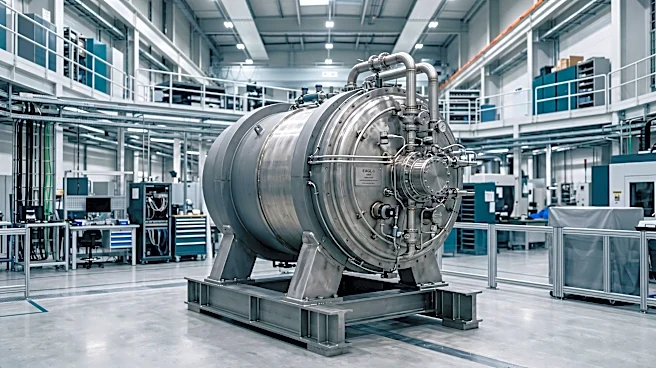
the discussion around Small Modular Reactors (SMRs) and microreactors. These advanced nuclear fission reactors, capable of generating up to 300 megawatts and less than 50 megawatts respectively, were emphasized for their potential to provide reliable, low-carbon power. The event explored various aspects of SMRs, including their ability to meet diverse power needs, with SMRs generating enough electricity for up to 300,000 homes and microreactors for smaller data centers. The symposium also touched upon the strategy of integrating these reactors into former coal power plant sites, leveraging existing infrastructure like transmission lines and potentially retraining coal plant workers. Colorado State Sen. Dylan Roberts noted the national trend of placing SMRs in decommissioned coal plants. The Radiant Kaleidos 1MW microreactor, slated for Buckley Space Force Base, is anticipated to be the next operational nuclear power plant in North America by 2028.
Why It's Important?
The focus on SMRs and microreactors at the Colorado School of Mines symposium signifies a growing national interest in advanced nuclear technology as a solution for reliable, low-carbon energy. The potential to repurpose decommissioned coal plant sites for SMRs offers a dual benefit: it provides a pathway for transitioning from fossil fuels to cleaner energy sources while also offering economic opportunities for communities previously reliant on coal. This approach could mitigate the economic impact of coal plant closures by utilizing existing infrastructure and workforce, thereby fostering a just energy transition. The development of SMRs and microreactors could also enhance energy security and grid stability, as these modular units can be deployed to meet specific regional power demands, from large cities to critical facilities like data centers and military bases. However, the symposium also highlighted potential challenges, such as the increased strain on uranium supplies, which would necessitate a ramp-up in uranium mining and advancements in nuclear fuel recycling to support expanded nuclear capacity.
What's Next?
The discussions at the Colorado School of Mines symposium indicate several potential next steps for nuclear energy development in the U.S. States like Colorado may consider establishing dedicated state nuclear offices, similar to Texas's Advanced Nuclear Energy Office, to facilitate and coordinate nuclear projects. The progress of TerraPower’s Natrium reactor in Wyoming, chaired by Microsoft founder Bill Gates, will be closely watched as a leading example in the SMR arena, potentially influencing future deployments. The anticipated operation of the Radiant Kaleidos 1MW microreactor at Buckley Space Force Base by 2028 will serve as a significant milestone, demonstrating the practical application and viability of microreactor technology. Furthermore, the increasing demand for uranium will likely spur efforts to expand domestic uranium mining and accelerate the development of nuclear fuel recycling technologies to ensure a sustainable supply chain for future nuclear power generation. Public webinars and community engagement will also be crucial for gaining social license and addressing concerns regarding new nuclear projects.
Beyond the Headlines
The shift towards SMRs and microreactors represents a significant evolution in nuclear energy, moving beyond the traditional large-scale nuclear power plants. This modular approach could decentralize power generation, making it more resilient to large-scale disruptions and potentially more adaptable to varying energy demands. The ethical implications of uranium mining and nuclear waste management will become increasingly prominent as nuclear capacity expands, requiring robust regulatory frameworks and innovative solutions for long-term storage and recycling. Culturally, the acceptance of nuclear energy in communities, particularly those transitioning from fossil fuel industries, will depend heavily on transparent communication, economic benefits, and perceived safety. The integration of nuclear technology into military installations, such as Buckley Space Force Base, also highlights its strategic importance for national security and critical infrastructure. This development could lead to a broader re-evaluation of nuclear energy's role in achieving both energy independence and climate goals, prompting deeper discussions on energy policy and investment priorities.