
What's Happening?
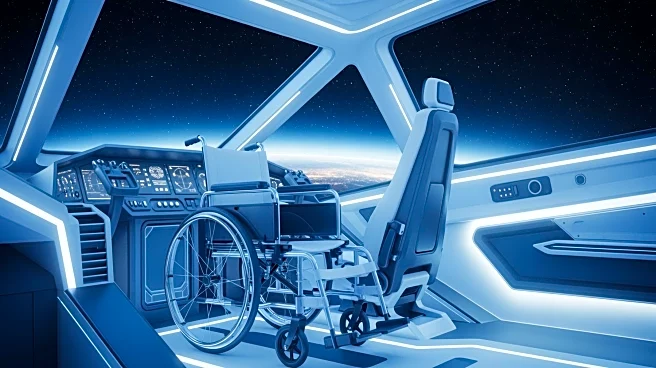
Michaela Benthaus, an aerospace and mechatronics engineer at the European Space Agency, became the first wheelchair user to travel to space. She participated in a Blue Origin suborbital flight, which launched
from Texas. The mission, using the New Shepard rocket, took Benthaus and other passengers across the Karman line, the recognized boundary of space, during a brief 10-minute journey. Benthaus, who uses a wheelchair following a spinal cord injury from a mountain biking accident, emphasized the importance of inclusivity in all aspects of society, including space travel. The flight was part of Blue Origin's ongoing efforts to maintain public interest in space tourism, as the company competes with other private space enterprises like Virgin Galactic and SpaceX.
Why It's Important?
This milestone underscores the growing emphasis on inclusivity within the space industry, demonstrating that space travel is becoming more accessible to individuals with disabilities. By enabling a wheelchair user to experience space, Blue Origin is setting a precedent for other companies to follow, potentially broadening the demographic of space tourists. This development could inspire technological advancements and policy changes aimed at making space travel more inclusive. Additionally, it highlights the competitive landscape of private space companies striving to capture public interest and market share in the burgeoning space tourism industry.
What's Next?
Blue Origin's successful mission with a wheelchair user may prompt other space companies to consider similar inclusive initiatives. As the space tourism industry grows, there may be increased pressure on companies to ensure their services are accessible to a wider range of individuals. This could lead to innovations in spacecraft design and safety protocols to accommodate passengers with various needs. Furthermore, the success of this mission may encourage regulatory bodies to develop guidelines that promote inclusivity in space travel.
Beyond the Headlines
The inclusion of a wheelchair user in space travel raises important ethical and cultural questions about accessibility and representation in emerging industries. It challenges societal norms and encourages a reevaluation of what is possible for individuals with disabilities. This event could also influence public perception and inspire future generations to pursue careers in STEM fields, regardless of physical limitations. As space travel becomes more mainstream, the industry may serve as a model for other sectors in terms of inclusivity and innovation.