





What's Happening?
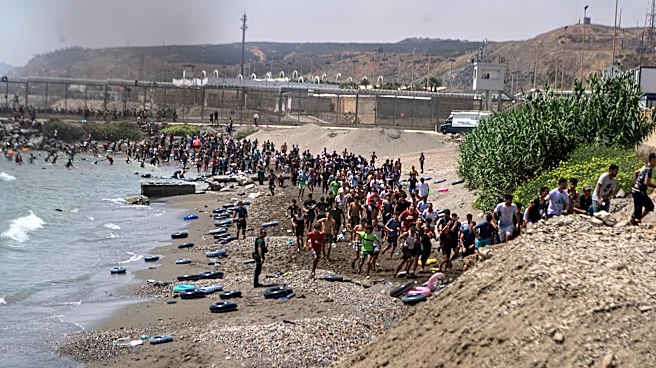
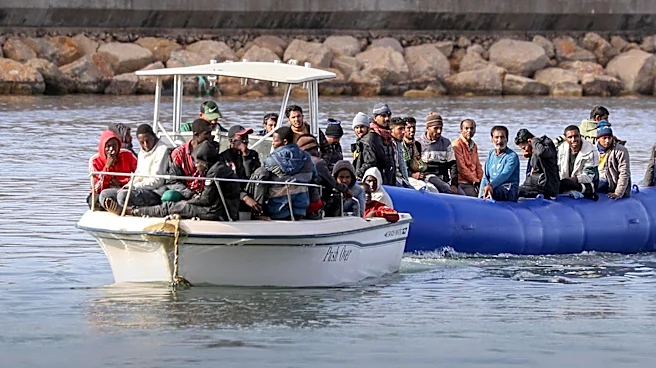
Thousands of migrants have crossed from Morocco into Spain's North African enclave of Ceuta, creating a significant crisis. This mass crossing has led Ceuta officials to request the Spanish government to declare a national emergency and seek military
intervention. The situation is reminiscent of the 2021 border crisis when over 8,000 migrants entered Ceuta in just two days. The influx has overwhelmed local reception centers, forcing many migrants to sleep on the streets. The Spanish government has responded by deploying military forces to maintain security, while Prime Minister Pedro Sánchez has pledged immediate action and coordination with Moroccan authorities.
Why It's Important?
The crisis in Ceuta highlights ongoing challenges in managing migration flows between Africa and Europe. The sudden influx of migrants puts pressure on local resources and infrastructure, raising humanitarian concerns. It also underscores the need for coordinated international efforts to address the root causes of migration, such as economic instability and political unrest in migrants' home countries. The situation could impact Spain's domestic policies and its relations with Morocco, as both countries work to manage border security and humanitarian needs. The crisis may also influence broader European Union policies on migration and border control.
What's Next?
In response to the crisis, the Spanish government is likely to continue its military deployment to stabilize the situation in Ceuta. Further diplomatic discussions between Spain and Morocco are expected to address border security and migration management. The European Union may also become involved, offering support and seeking long-term solutions to prevent similar crises. Humanitarian organizations are likely to increase their presence in the region to provide aid to migrants. The situation may prompt policy reviews and reforms in Spain and potentially influence EU-wide migration strategies.