
What's Happening?
India's Defence Minister Rajnath Singh announced that the country is on the path to becoming self-reliant in the defence sector. Speaking at a ceremony in Lucknow, Singh highlighted that India's domestic
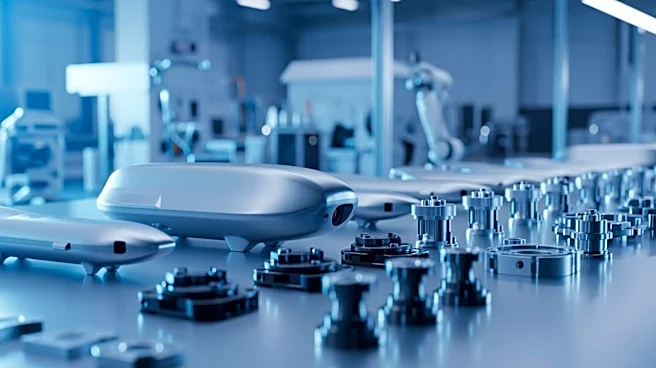
defence production reached a record 1.51 lakh crore rupees for the 2024-25 fiscal year, with defence exports hitting an all-time high of 38,424 crore rupees in 2025-26. Lucknow has been declared a Defence Node, with the first batch of BrahMos missiles manufactured there handed over to the Indian Army. The city is also seeing the establishment of numerous factories dedicated to defence equipment manufacturing.
Why It's Important?
This development is crucial for India's strategic autonomy and economic growth. By boosting domestic production and exports, India aims to reduce its dependency on foreign defence imports, enhancing national security and creating jobs. The establishment of defence nodes in cities like Lucknow signifies a decentralization of defence manufacturing, potentially leading to regional economic development. The focus on self-reliance aligns with the government's broader 'Make in India' initiative, which seeks to position India as a global manufacturing hub. This move is expected to strengthen India's defence capabilities and contribute to its standing as a leading global power.
What's Next?
The Indian government is likely to continue its efforts to expand domestic defence manufacturing capabilities. This includes further investments in infrastructure and technology to support the production of advanced defence equipment. The success of these initiatives could lead to increased foreign investment and partnerships in India's defence sector. Additionally, the government may introduce policies to encourage private sector participation and innovation in defence manufacturing. As India progresses towards self-reliance, it will need to address challenges such as technology transfer and skill development to sustain growth in this sector.