


What's Happening?
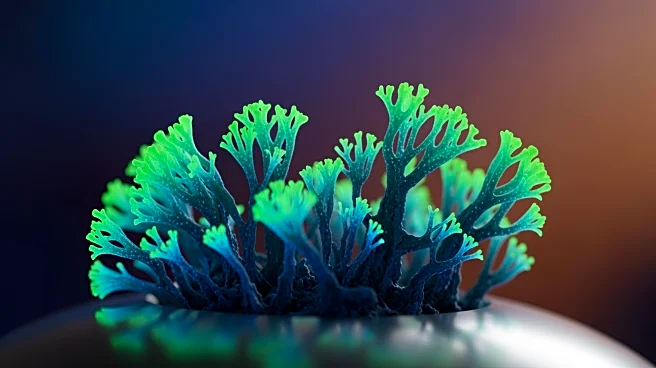
Researchers are exploring the potential of lab-grown lichens to aid in sustainable construction both on Earth and in space. Synthetic lichens, which are a symbiotic combination of fungi and cyanobacteria, are being developed to produce useful compounds
like antibiotics and biofuels. These lichens can also be used to repair buildings and combat climate change by capturing carbon dioxide. The concept is being extended to space exploration, where synthetic lichens could be used to create building materials on Mars. This innovative approach leverages the natural resilience and symbiotic efficiency of lichens to address environmental and construction challenges.
Why It's Important?
The development of synthetic lichens represents a significant advancement in biotechnology with potential applications in sustainable construction and environmental management. On Earth, these lichens could revolutionize the building industry by providing self-healing materials and reducing the carbon footprint of construction. In space, they offer a viable solution for building habitats on Mars, reducing the need to transport materials from Earth. This technology could play a crucial role in future space colonization efforts and in addressing pressing environmental issues on our planet. The ability to produce essential compounds sustainably also holds promise for various industries, including pharmaceuticals and energy.