







What's Happening?
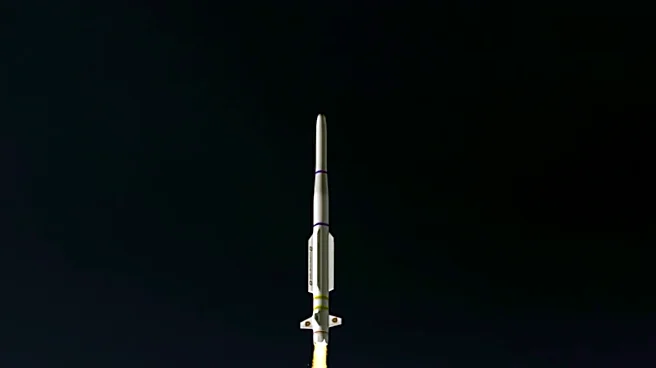
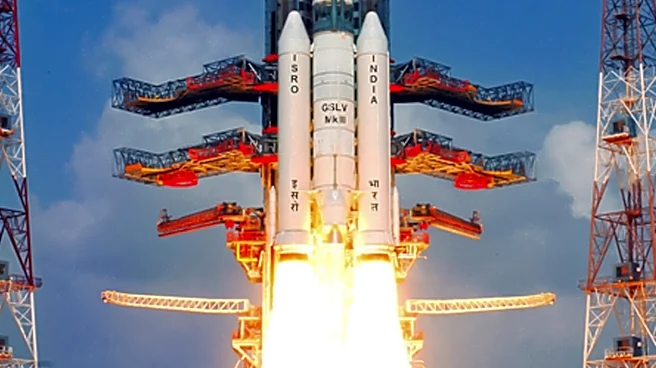
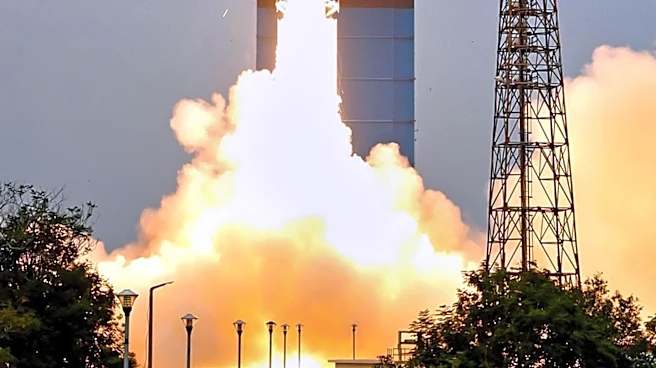
On July 18, Skyroot Aerospace, a Hyderabad-based company, successfully launched Vikram-1, India's first privately developed orbital launch vehicle. This mission, named Mission Aagaman, signifies the entry of India's private sector into the global space launch market,
previously dominated by U.S. and Chinese companies. The Vikram-1 rocket, named after Dr. Vikram Sarabhai, uses advanced technologies such as carbon composite structures and 3D-printed components. This launch is a result of policy reforms that opened the Indian space sector to private participation, transforming the landscape and allowing private companies to complement the Indian Space Research Organisation (ISRO).
Why It's Important?
The successful launch of Vikram-1 is a significant milestone for India's space industry, highlighting the growing role of private companies in a sector traditionally dominated by government agencies. This development is expected to boost private investment in India's space sector, creating high-skilled jobs and fostering technological innovation. As global demand for satellite launches increases, Indian companies are well-positioned to offer cost-effective and reliable launch services, leveraging India's engineering talent and competitive costs. This could establish India as a major player in the global commercial launch market, similar to its IT and telecom sectors.
What's Next?
Following the success of Vikram-1, further private investment in India's space sector is anticipated. This could lead to increased collaboration between government and private entities, expanding India's presence in the global space industry. The Indian government may continue to support this growth through favorable policies and infrastructure development. As more private companies enter the market, competition could drive innovation and efficiency, potentially lowering costs and increasing access to space for various applications, including Earth observation, communication, and scientific research.