



What's Happening?
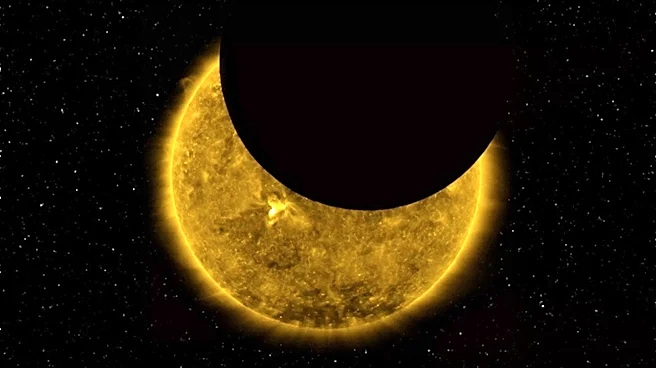
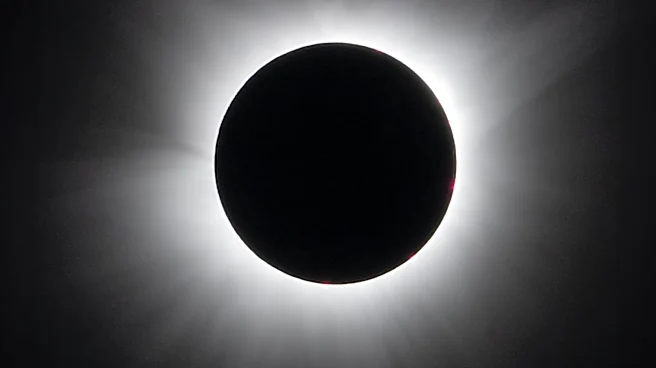
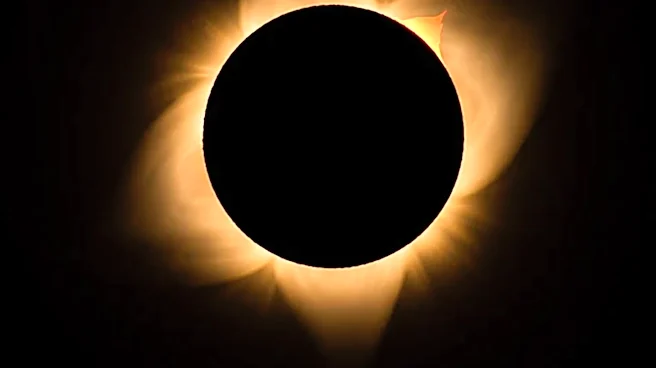
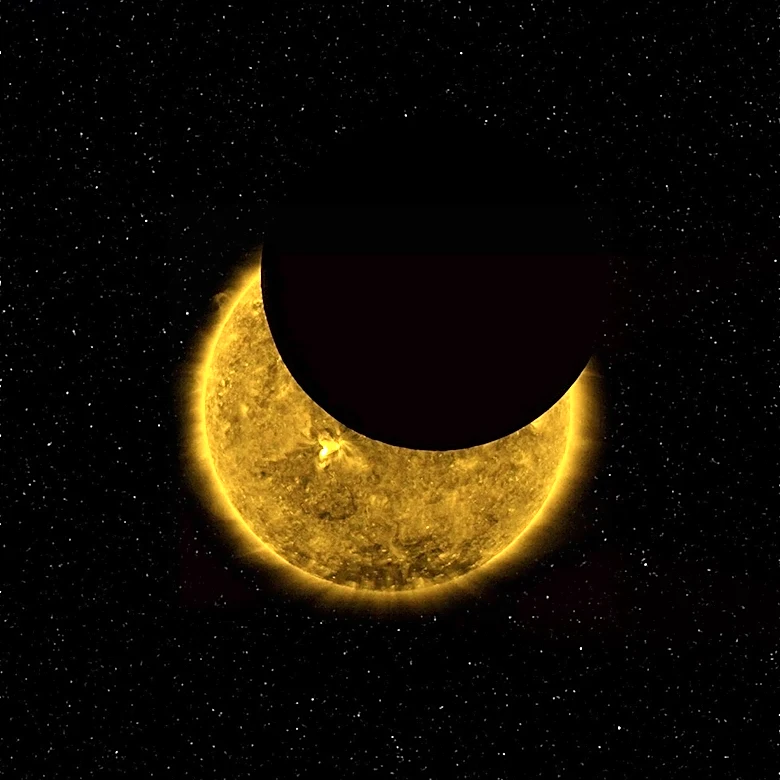
In 1973, a Concorde aircraft set a world record by observing a total solar eclipse for 74 minutes, flying at Mach 2.2. The Concorde 001 prototype, equipped with telescopes, followed the eclipse's path across Africa, providing unprecedented observation
time. This achievement was led by scientist Pierre Léna, who proposed using the supersonic aircraft to extend the duration of totality beyond the typical 7.5 minutes observed from the ground. The mission demonstrated the potential of high-speed aircraft for scientific research, capturing detailed images of the Sun's corona.
Why It's Important?
This historic flight showcased the innovative use of aviation technology for scientific exploration, setting a benchmark for future research missions. The extended observation time allowed scientists to gather valuable data on solar phenomena, contributing to our understanding of the Sun's behavior. The mission highlighted the potential of repurposing existing technology for new scientific applications, inspiring future collaborations between aerospace and research communities. The success of this mission underscored the importance of interdisciplinary approaches in advancing scientific knowledge.
Beyond the Headlines
The Concorde's eclipse chase represents a unique intersection of aviation and astronomy, illustrating the broader implications of technological advancements in scientific research. It highlights the role of international collaboration in achieving scientific milestones, as the mission involved coordination across multiple countries. The legacy of this mission continues to influence contemporary research, encouraging the use of innovative methods to overcome observational limitations. The Concorde's achievement remains a testament to human ingenuity and the pursuit of knowledge.