


What's Happening?
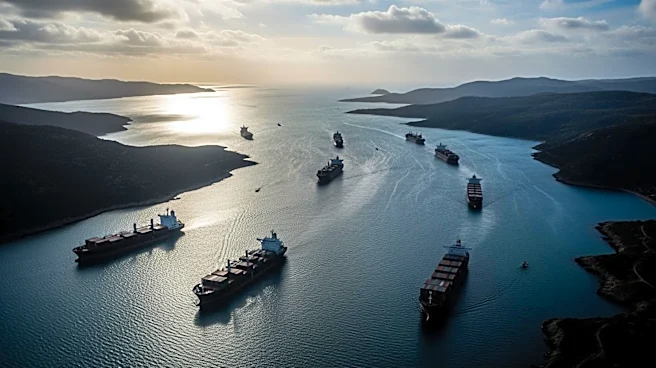
The United Nations Food and Agriculture Organization (FAO) has issued a warning about a potential global food crisis resulting from the blockade of the Strait of Hormuz. This critical waterway, which facilitates the transport of a significant portion
of the world's liquefied natural gas and crude oil, has been blocked due to geopolitical tensions involving Iran and the United States. The blockade has stranded numerous vessels, leading to disruptions in the supply of essential goods such as fertilizers and energy resources. The FAO's chief economist, Maximo Torero, highlighted the potential for reduced agricultural yields and increased food prices if the blockade persists. The situation is further complicated by rising oil prices, which are incentivizing farmers to divert crops like maize and sugar towards biofuel production, thereby tightening the balance between food and fuel.
Why It's Important?
The blockade of the Strait of Hormuz poses a significant threat to global food security. As a major conduit for energy and agricultural inputs, its closure could lead to widespread shortages and price increases, affecting food manufacturers and consumers worldwide. The disruption in the supply of fertilizers and energy resources could result in lower agricultural yields, exacerbating food scarcity. Additionally, the shift towards biofuel production due to higher oil prices could further strain food supplies. This situation underscores the interconnectedness of global supply chains and the potential for geopolitical conflicts to have far-reaching impacts on food security and economic stability.
What's Next?
Efforts are underway to address the crisis, with France and Britain leading discussions on establishing a multinational mission to ensure maritime transit through the Strait of Hormuz. However, even with a ceasefire, it could take weeks for normal traffic to resume. In the meantime, countries and companies may need to explore alternative routes and strategies to mitigate the impact of the blockade. The situation calls for urgent diplomatic solutions to prevent a full-blown food crisis and ensure the stability of global supply chains.