

What's Happening?
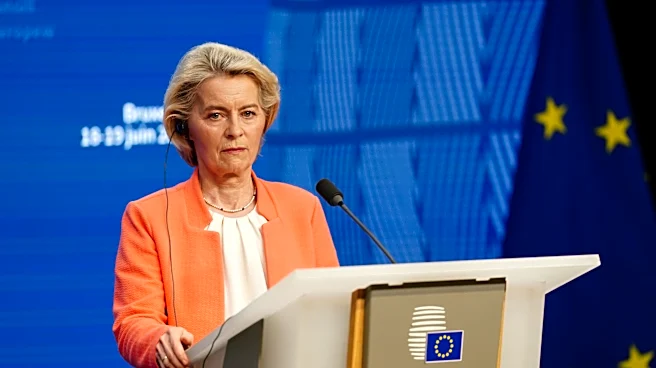
The European Union delivered a statement at a UN Security Council Arria-formula meeting, highlighting the severe global issue of conflict-induced food insecurity. The EU condemned the weaponization of food, citing Russia's intensified attacks on Ukraine's
agricultural export infrastructure and unlawful denials of humanitarian access. Globally, 266 million people face acute food insecurity, with critical situations in Afghanistan, Democratic Republic of the Congo, Haiti, Occupied Palestinian Territory, Somalia, South Sudan, Sudan, and Yemen. The EU emphasized the need for implementing UNSC Resolution 2417, respecting international humanitarian law, and holding violators accountable. The statement also called for food diplomacy to support early action based on data and risk analysis, strengthening resilience and local self-reliance in partner countries, and maintaining open, predictable, and rules-based trade flows for food and fertilizers. The EU reiterated its commitment as the largest collective humanitarian donor, allocating approximately EUR 780 million annually to emergency food assistance and nutrition, focusing on combining immediate support with long-term resilience.
Why It's Important?
This statement underscores the critical link between armed conflict and global food security, a nexus that has profound implications for international stability and humanitarian efforts. The EU's condemnation of food weaponization by Russia highlights a dangerous precedent that can exacerbate humanitarian crises and destabilize global food markets, affecting countries far beyond the immediate conflict zones. The call for adherence to international humanitarian law and accountability for violations is crucial for protecting civilian populations and ensuring humanitarian aid can reach those in need. Furthermore, the emphasis on strengthening local resilience and self-reliance in food systems is vital for long-term stability, reducing dependency on external aid, and preventing future crises. Maintaining open trade flows for food and fertilizers is essential to prevent price spikes and ensure equitable access, which directly impacts the economic stability and food availability in vulnerable nations, including those that rely heavily on imports.
What's Next?
The EU's statement calls for continued international cooperation and adherence to existing resolutions and laws. Future actions will likely involve sustained diplomatic efforts to pressure actors like Russia to cease attacks on agricultural infrastructure and facilitate humanitarian access. There will be an ongoing focus on implementing Resolution 2417 and strengthening early warning systems for food insecurity, potentially through enhanced data sharing and geospatial intelligence. The EU and its partners will continue to invest in resilient agriculture and food systems in vulnerable countries, integrating humanitarian, development, and peace initiatives. Discussions will also persist within international forums to ensure predictable trade flows and prevent unjustified export restrictions on food and fertilizers. The international community will need to monitor conflict zones closely for potential food crises and coordinate responses to provide both emergency aid and long-term development support.
Beyond the Headlines
The weaponization of food, as highlighted by the EU, represents a significant ethical and strategic challenge in modern conflicts. It moves beyond traditional warfare to directly target civilian sustenance, raising questions about the moral boundaries of conflict and the effectiveness of international humanitarian law in practice. This approach can create protracted humanitarian crises, leading to mass displacement, increased mortality, and long-term societal breakdown, which in turn can fuel further instability and radicalization. The emphasis on local self-reliance also points to a broader shift in development philosophy, moving away from purely aid-dependent models towards empowering communities to build their own sustainable food systems. This approach, while challenging, could foster greater regional stability and reduce the leverage of external actors who might seek to exploit food insecurity for geopolitical gains. The ongoing disruption of global food systems also necessitates a re-evaluation of supply chain vulnerabilities and the need for greater diversification and regionalization of food production.