





What's Happening?
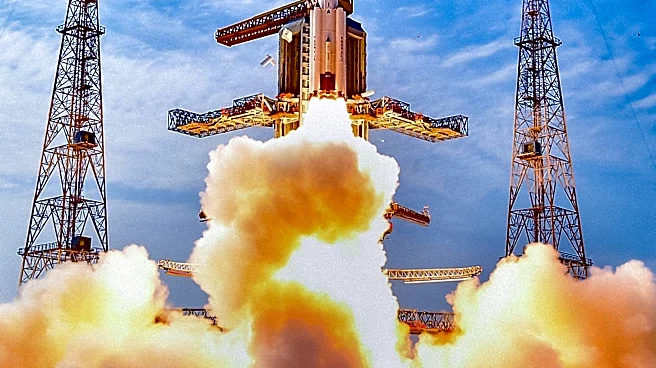
The Indian Space Research Organisation (ISRO) successfully launched its GSLV-F18 rocket carrying the NVS-03 navigation satellite on October 30, 2026, from the Satish Dhawan Space Centre in Sriharikota. This mission marks a significant step in strengthening
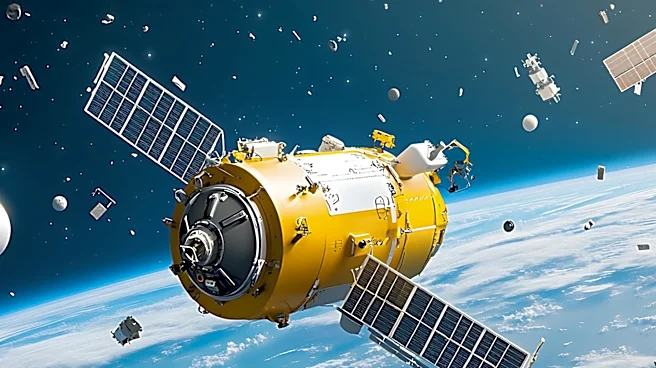
India's satellite navigation infrastructure. The GSLV-F18 launch vehicle precisely injected the NVS-03 into a Geosynchronous Transfer Orbit (GTO). Following the launch, the satellite underwent its first orbit maneuver on October 31, 2026, and further maneuvers are planned to position it in its designated geosynchronous orbital slot at 111.75° East. NVS-03 is the third satellite in India's second-generation Navigation with Indian Constellation (NavIC) series, designed to enhance the coverage, accuracy, and reliability of India's regional navigation system. This mission is the 20th flight of India's Geosynchronous Satellite Launch Vehicle program, demonstrating the continued operational use of India's launch vehicle for strategic space missions. The satellite carries navigation payloads in the L1, L5, and S frequency bands, with the L1 signal enhancing NavIC's capabilities and compatibility, supporting navigation coverage across India's landmass and a 1,500 km region beyond its geopolitical boundary. The NVS-03 also features an indigenously developed atomic clock, crucial for precise time references in navigation signal generation.
Why It's Important?
The successful deployment of NVS-03 is a crucial milestone in India's pursuit of 'Atmanirbhar Bharat' (self-reliant India) in advanced space technology. By strengthening indigenous satellite navigation capabilities, India reduces its dependence on foreign satellite navigation systems for critical applications, thereby enhancing its ability to provide reliable positioning, navigation, and timing services independently. This advancement reinforces India's space sovereignty and technological self-reliance, solidifying its growing role in the global space sector. The enhanced NavIC system will support a wide range of applications, including transportation, maritime operations, aviation, disaster management, precision agriculture, and strategic services. The inclusion of the L1 signal alongside L5 and S signals improves compatibility with other global navigation satellite systems (GNSS) like GPS, Glonass, Galileo, and BeiDou, making NavIC more versatile and widely usable. The indigenous atomic clock further underscores India's progress in developing critical space technologies domestically, ensuring greater control and security over its navigation infrastructure.
What's Next?
Following the successful injection into GTO, NVS-03 will undergo further orbit maneuvers to reach its final geosynchronous orbital slot at 111.75° East. These maneuvers are critical for the satellite to achieve its operational position and begin providing navigation services. The NVS series is planned to include five satellites (NVS-01 to NVS-05), with NVS-01, NVS-02, and NVS-03 already launched. NVS-04 and NVS-05 are in the pipeline, and their deployment will further augment the NavIC constellation, ensuring continuity and enhancing the reliability and availability of indigenous navigation services. ISRO will continue to monitor the health and performance of NVS-03 to ensure its optimal functioning. The data and experience gained from this mission will be crucial for the development and launch of future satellites in the NavIC series, further solidifying India's independent positioning, navigation, and timing capabilities.
Beyond the Headlines
The successful launch of NVS-03 has broader implications beyond immediate navigation services. It signifies India's commitment to developing a robust and independent space infrastructure, which is vital for national security and economic growth. The ability to provide precise positioning, navigation, and timing services independently reduces vulnerabilities associated with relying on foreign systems, especially in strategic applications. This technological self-reliance also positions India as a significant player in the global space economy, potentially opening avenues for international collaborations and commercial opportunities in satellite navigation services. Furthermore, the development of indigenous technologies like atomic clocks fosters a skilled workforce and advances scientific research within the country, contributing to overall technological progress. The NavIC system, with its enhanced capabilities, could also play a crucial role in regional cooperation, offering navigation services to neighboring countries and strengthening India's geopolitical influence in the region.