



What's Happening?
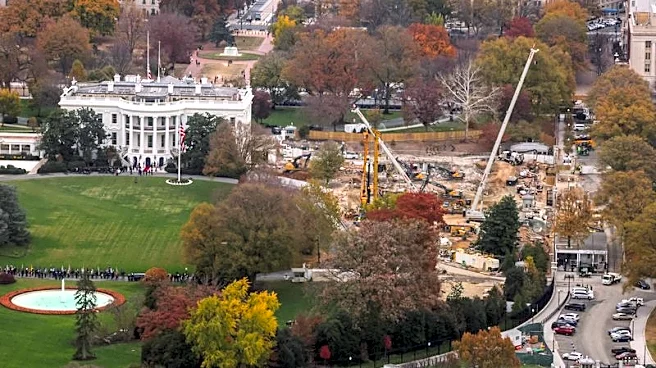
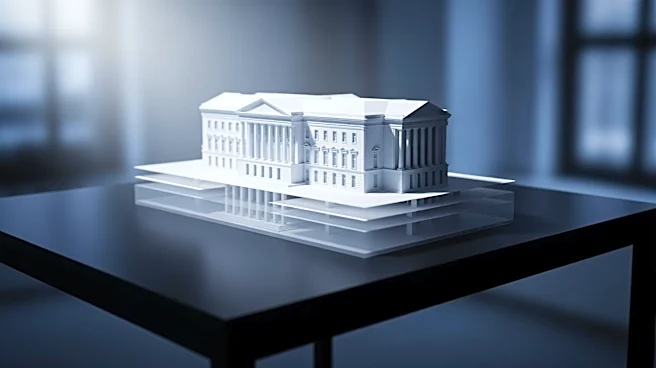
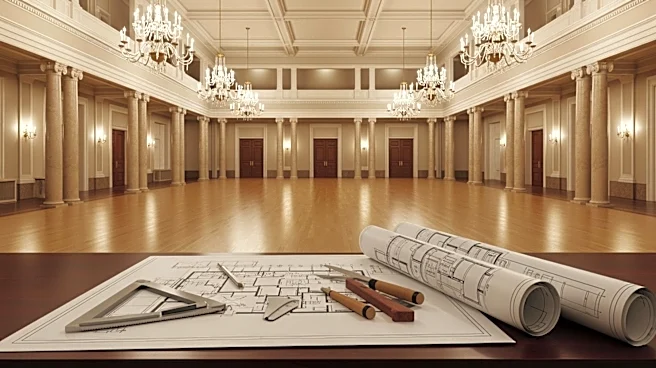
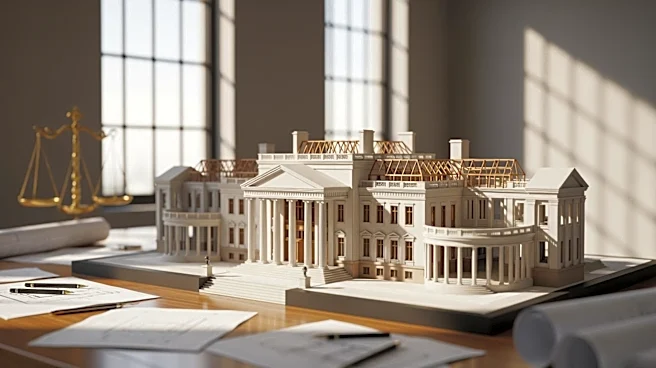
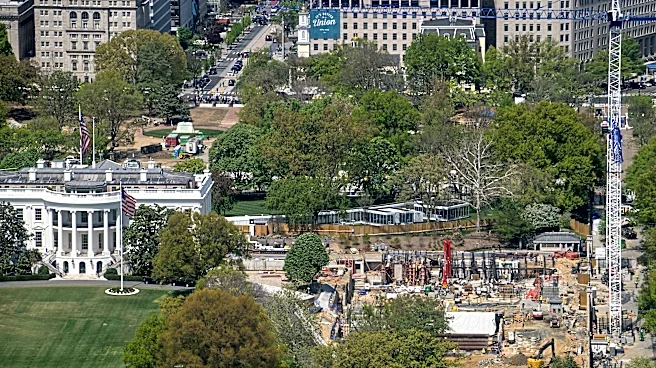
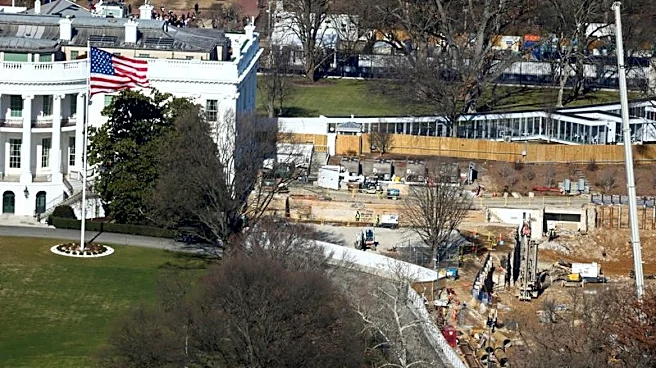
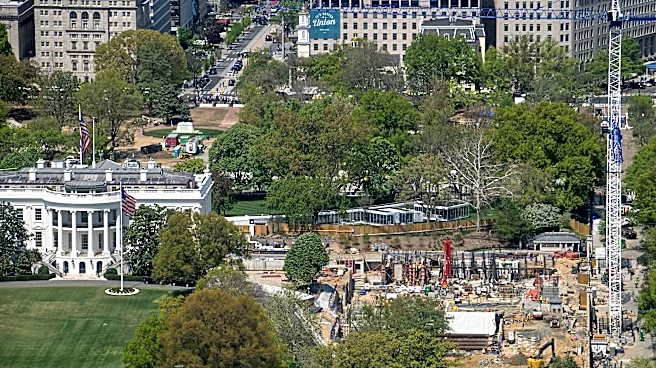
A federal appeals court has temporarily allowed President Trump to continue the construction of a $400 million ballroom at the White House. This decision comes after a lower court had blocked above-ground construction on the site of the former East Wing.
The U.S. Court of Appeals for the District of Columbia Circuit issued a temporary hold on the lower court's order, allowing underground work to continue while scheduling a hearing for June 5 to review the case. The National Trust for Historic Preservation had sued to block the construction, arguing that Trump overstepped his authority by proceeding without necessary approvals. The ballroom project, funded by donations, has been a point of contention due to its scale and the use of taxpayer dollars for security aspects.
Why It's Important?
The continuation of the ballroom construction at the White House raises significant questions about presidential authority and the use of public and private funds for government projects. The case highlights the ongoing debate over the balance of power between the executive branch and regulatory oversight by federal agencies and Congress. The outcome of this legal battle could set a precedent for future presidential projects and the extent of executive power in altering historic sites. Additionally, the involvement of private donations in funding government projects may prompt discussions on transparency and accountability in public spending.
What's Next?
The scheduled hearing on June 5 will be crucial in determining the future of the ballroom construction. Stakeholders, including the National Trust for Historic Preservation and federal agencies, will likely present arguments regarding the legality and appropriateness of the project. The decision could influence future executive actions related to construction and renovation of government properties. Public and political reactions may vary, with potential implications for President Trump's legacy and the preservation of historic sites.