



What's Happening?
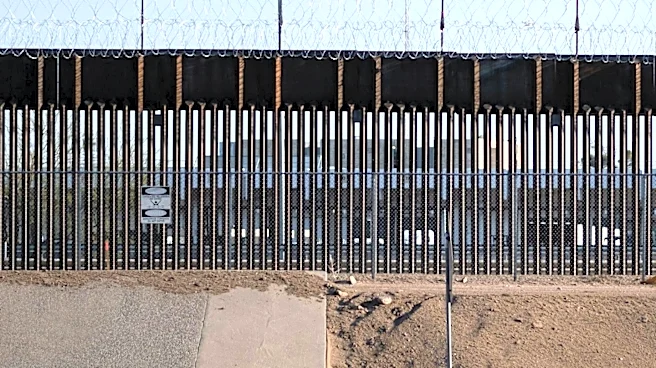
A recent article discusses the Democratic Party's immigration policies, likening them to hybrid warfare against the American people. The piece argues that the Biden administration's approach to immigration, particularly the rescinding of Trump-era border
policies, has led to a significant increase in illegal border crossings. The article claims that this influx is not merely a result of foreign influence or cartel activities but is orchestrated by the Democratic Party to alter the demographic landscape of the United States. The narrative draws parallels with a recent event in Ceuta, Spain, where mass migration was used as a geopolitical tool by Morocco, suggesting a similar strategy is being employed domestically by Democrats.
Why It's Important?
The implications of this perspective are significant for U.S. politics and society. If the claims hold, it suggests a deliberate strategy by the Democratic Party to reshape the electorate by encouraging mass immigration. This could have profound effects on future elections, policy-making, and the social fabric of the nation. The article posits that such actions could undermine national sovereignty and security, framing the issue as a domestic threat rather than an external one. This narrative could influence public opinion and policy debates around immigration, potentially leading to stricter immigration controls or reforms.
What's Next?
The article suggests that if Democrats regain control of Congress or the White House, they may quickly reinstate policies that facilitate mass immigration. This potential shift could reignite debates over border security and immigration reform. Stakeholders, including political leaders, advocacy groups, and the public, may respond with increased activism and lobbying efforts. The situation could also lead to heightened tensions between political parties, influencing legislative priorities and electoral strategies.
Beyond the Headlines
The framing of immigration as a form of hybrid warfare raises ethical and cultural questions about national identity and the role of immigration in society. It challenges the traditional view of immigration as a humanitarian issue, instead presenting it as a strategic maneuver with potential long-term consequences for American democracy. This perspective may influence how immigration is discussed in media and political discourse, potentially affecting public perceptions and policy decisions.