





What's Happening?
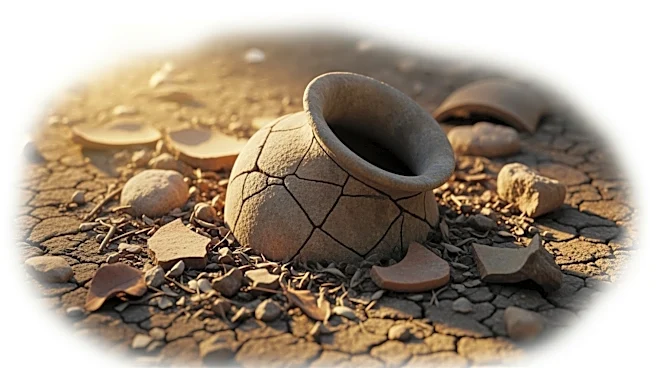
Kristina Douglass, an archaeologist and associate professor at Columbia University’s Climate School, emphasizes the importance of studying ancient trash to understand past human adaptation to climate change. Douglass, a 2025 MacArthur Fellow, leads the Ola
Be Taloha Lab, which focuses on how past communities, particularly in Madagascar, co-evolved with their environment. Her research aims to use historical insights to support modern communities facing climate challenges. Douglass argues that archaeological findings provide a democratic view of history, revealing the everyday lives of average people rather than just the elite. Her work involves collaborating with local and indigenous communities, who are often excluded from sustainability policy discussions, to elevate their voices in decision-making processes.
Why It's Important?
Douglass' research underscores the potential of archaeological insights to inform current climate adaptation strategies. By understanding how ancient communities adapted to environmental changes, modern societies can develop more effective responses to current climate challenges. This approach highlights the value of integrating indigenous knowledge and local experiences into policy-making, which can lead to more sustainable and equitable solutions. The focus on trash as a historical record offers a unique perspective on human resilience and adaptation, providing lessons that are increasingly relevant as climate change accelerates.
What's Next?
Douglass advocates for greater inclusion of indigenous and local communities in climate policy discussions. Her work suggests that empowering these communities to participate in decision-making can lead to more sustainable management of natural resources. As climate change continues to impact vulnerable regions, there is a growing need for policies that incorporate traditional knowledge and practices. Douglass' research may influence future climate strategies by highlighting the importance of historical and cultural contexts in shaping effective adaptation measures.
Beyond the Headlines
The ethical dimension of Douglass' work involves addressing historical injustices by ensuring that marginalized communities have a voice in climate policy. Her research challenges the traditional top-down approach to policy-making, advocating for a more inclusive and participatory process. This shift could lead to long-term cultural and environmental sustainability, as well as greater social equity. By focusing on the stories and knowledge of indigenous peoples, Douglass' work contributes to a broader understanding of human-environment interactions and the potential for collaborative solutions to global challenges.