



What's Happening?
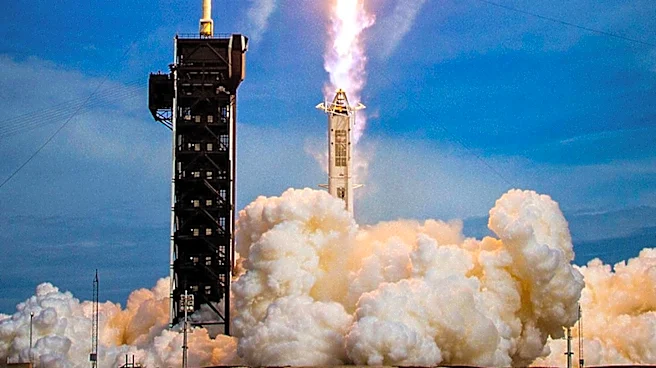
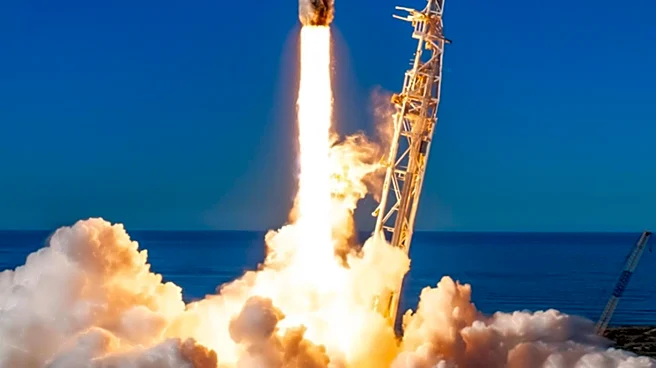
A U.S. Space Force mission, designated USSF-432, was successfully launched by a SpaceX Falcon 9 rocket from Vandenberg Space Force Base at 00:48 UTC on November 7. The mission achieved its objectives, though specific details regarding the payload have
not been publicly released. This launch was one of five successful launches logged during the week of November 1 to November 8, with all missions succeeding. The USSF-432 mission underscores the ongoing collaboration between the U.S. Space Force and commercial space companies like SpaceX for national security objectives. The lack of public information about the payload is typical for classified military space missions, indicating its strategic importance.
Why It's Important?
The successful launch of USSF-432 by SpaceX highlights the increasing reliance of the U.S. Space Force on commercial launch providers for critical national security missions. This partnership allows the Space Force to leverage the rapid launch capabilities and cost efficiencies offered by companies like SpaceX, accelerating the deployment of essential space assets. While the specific nature of the payload remains undisclosed, such missions are vital for maintaining U.S. dominance in space, supporting intelligence, surveillance, reconnaissance, and communication capabilities. The continuous deployment of these assets is crucial for protecting U.S. interests and projecting power globally, especially in an era of heightened competition in the space domain. The success of this mission reinforces the reliability of the Falcon 9 rocket as a workhorse for both commercial and government launches.
What's Next?
While the immediate details of the USSF-432 payload are classified, its successful deployment means it will likely contribute to existing or new U.S. space capabilities. In the coming week, observers will be watching for the USSF-432 satellite to appear in public catalogs, which may offer some indirect clues about its orbital characteristics, even if its specific function remains undisclosed. The ongoing trend of the U.S. Space Force utilizing commercial launch services is expected to continue, with more contracts and missions anticipated in the future. This collaboration will likely drive further innovation in launch technology and satellite capabilities, as commercial providers compete to meet the demanding requirements of national security space operations.
Beyond the Headlines
The classified nature of missions like USSF-432 points to the growing 'black' side of space operations, where strategic assets are deployed with minimal public disclosure. This secrecy is a reflection of the intense geopolitical competition in space, particularly with rivals like China and Russia. The increasing integration of commercial entities into national security space programs blurs the lines between civilian and military space activities, raising questions about transparency, accountability, and the potential for commercial assets to become targets in future conflicts. This development also signifies a shift in the traditional defense procurement model, moving towards more agile and commercially driven solutions to maintain a technological edge in space. The long-term implications include a more complex and potentially less transparent space environment, where the capabilities and intentions of various actors are harder to ascertain.