


What's Happening?
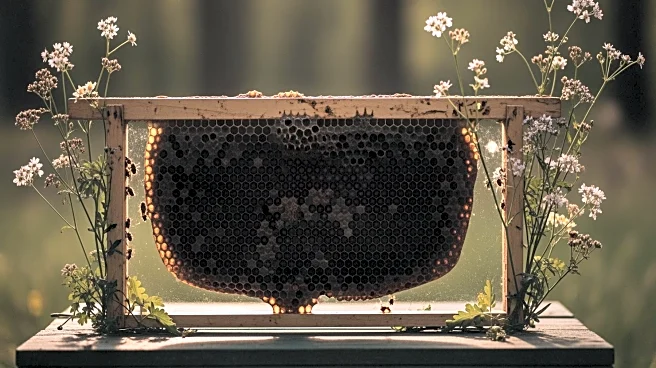
In Belgium, an annual event known as the 'wedding flight' is helping to revive the European dark bee, a native subspecies of the honeybee. This event, held in the town of Chimay, involves 1,000 virgin queens mating with male bees to spread the genetic
material of the endangered dark bee. The initiative, which began in 2000, aims to counter the decline of the dark bee population caused by the introduction of hybrid honeybees. Beekeepers from across Europe participate in this event to collect fertilized queens and establish new colonies, promoting the conservation of this native species.
Why It's Important?
The revival of the European dark bee is crucial for maintaining biodiversity and ecological balance. Dark bees are better adapted to local climates and are more resilient to diseases and invasive species, such as the Asian hornet. By preserving this native subspecies, beekeepers can reduce the reliance on hybrid bees, which have contributed to the decline of native populations. This initiative highlights the importance of conserving local biodiversity as a strategy for sustainable beekeeping and ecological resilience, particularly in the face of climate change and environmental challenges.
What's Next?
Efforts to protect and expand the population of dark bees will continue, with plans to extend protected zones where only dark bees can be kept. Conservationists are also working to restore wild populations by creating suitable habitats. The success of these initiatives could lead to increased interest in sustainable beekeeping practices across Europe. As awareness grows, more beekeepers may adopt native bee species, contributing to the preservation of biodiversity and the resilience of ecosystems.