


What's Happening?
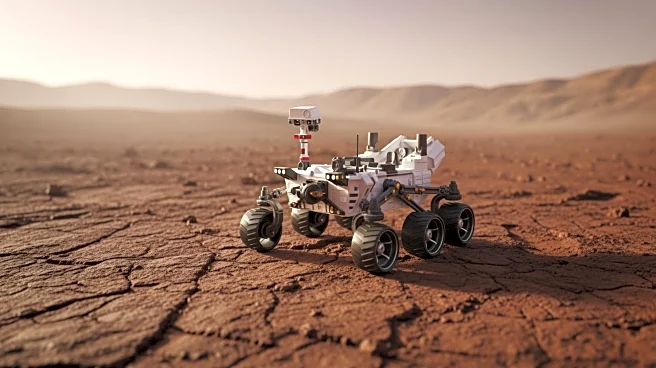
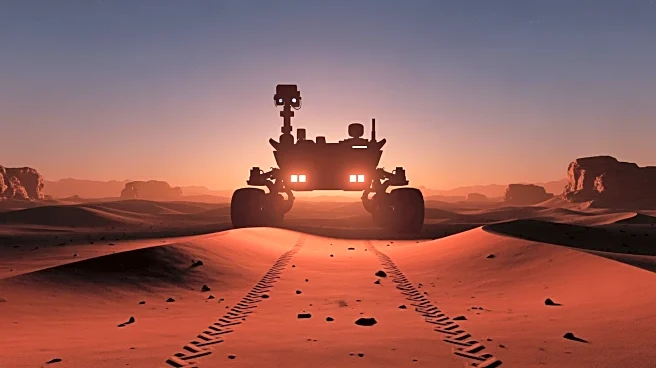
NASA's Perseverance Rover has successfully traversed 1,496 feet of Martian terrain using a route planned and executed by a generative AI model. This AI, developed in collaboration with Anthropic, utilized data from the Mars Reconnaissance Orbiter to plot
a safe path for the rover, avoiding potential hazards. The AI's ability to autonomously navigate the rover marks a significant advancement in space exploration technology, allowing for more efficient operations on Mars. The use of AI in this context demonstrates its potential to enhance the capabilities of robotic missions, particularly in environments where real-time human control is not feasible due to communication delays.
Why It's Important?
The successful deployment of AI to guide the Perseverance Rover represents a major step forward in the use of autonomous technologies in space exploration. This development could lead to more efficient and effective missions, as AI can handle complex navigation tasks and respond to challenging terrain without direct human intervention. By reducing the workload on human operators, AI allows for greater focus on scientific research and data analysis. This advancement also sets the stage for future missions that may rely more heavily on AI to explore distant planets and gather valuable scientific information.
What's Next?
As AI technology continues to evolve, NASA plans to expand its use in future missions, potentially allowing for longer and more complex rover journeys on Mars. The success of this initial test could lead to increased reliance on AI for navigation and other critical tasks, ultimately enhancing the scientific return of space missions. Researchers will continue to refine AI models to improve their accuracy and reliability, paving the way for more autonomous exploration of the Martian surface and beyond.