



What's Happening?
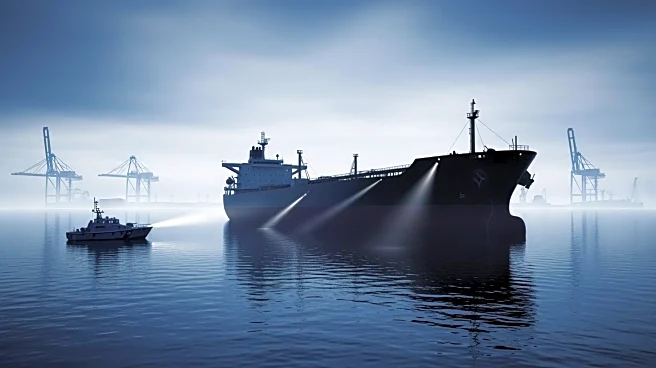
The United States is contemplating deploying additional resources to forcibly board the oil tanker Bella 1, which has been evading U.S. authorities in international waters near Venezuela. This action is part of President Trump's directive to enforce a blockade
on Venezuelan oil tankers, aiming to cut off President Nicolás Maduro's primary economic lifeline. The Bella 1, described as a 'dark fleet vessel' under U.S. sanctions, refused to comply with the U.S. Coast Guard's interdiction efforts, opting instead to flee into the Atlantic Ocean. The U.S. military presence in the Caribbean has been bolstered, including the deployment of the USS Gerald Ford, to support these enforcement actions. While the U.S. has successfully intercepted other tankers, the Bella 1 remains at large, linked to sanctioned Iranian oil and proxy groups.
Why It's Important?
The U.S. strategy to intercept Venezuelan oil tankers is a critical component of its broader policy to exert economic pressure on President Maduro's regime. By targeting Venezuela's oil exports, the U.S. aims to weaken Maduro's financial resources, potentially destabilizing his government. This move underscores the U.S.'s commitment to enforcing international sanctions and maintaining pressure on authoritarian regimes. The situation also highlights the geopolitical tensions in the Caribbean, with the U.S. military's significant presence in the region serving as a deterrent to potential adversaries. The outcome of these actions could influence U.S.-Venezuela relations and impact global oil markets, particularly if the U.S. succeeds in seizing more oil shipments.
What's Next?
The U.S. may deploy a specialized Maritime Special Response Team to board the Bella 1 if it continues to evade capture. This decision will depend on the ship's movements and the strategic assessment of U.S. officials. The ongoing pursuit of the Bella 1 could lead to further diplomatic tensions between the U.S. and Venezuela, as well as with other nations involved in the oil trade. Additionally, the U.S. may continue to enhance its military presence in the Caribbean to ensure the enforcement of sanctions. The international community will be closely monitoring these developments, as they could have broader implications for regional stability and international trade.