
What's Happening?
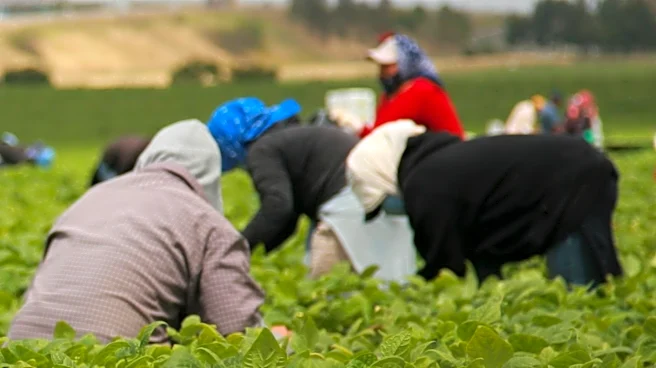
The U.S. food system heavily depends on transnational labor, particularly from Indigenous Mexican migrant farmworkers like Samuel and Sara, who harvest fruits and vegetables in the western United States.
These workers, over 70% of whom are foreign-born, sustain an agricultural industry valued at $1.264 trillion. The concept of a 'food circuit' is proposed to better understand this system, highlighting the transnational flow of people, chemicals, seeds, land, practices, and policies. This circuit regulates mobility, often forcing workers like Samuel and Sara to migrate for economic survival while limiting their ability to return home or access adequate healthcare. The system outsources the costs of this labor to Mexico and to families divided across national borders, who maintain connections through phone calls, social media, and remittances. Workers in the food industry, including those in warehouses, transportation, and grocery stores, are subjected to limited mobility while capital moves freely. This structure leads to significant health consequences for workers, including exposure to pesticides, heat-related illnesses, and musculoskeletal injuries, often without adequate access to medical care or compensation.
Why It's Important?
This analysis reveals the hidden human cost embedded within the U.S. food system, demonstrating how the pursuit of cheap food externalizes significant social and health costs onto migrant workers and their families. The reliance on a transnational labor force, often without proper documentation or protections, creates a vulnerable population susceptible to exploitation and severe health issues. The 'food circuit' framework highlights how the physical separation of families across borders does not stop their labor but rather distributes it, with family members in Mexico providing essential reproductive labor that supports the U.S. agricultural industry. The lack of accessible healthcare and legal support for injured workers, coupled with policy gaps like the H-2A Visa Program, perpetuates a cycle of low wages and high profits for agroindustries. This system not only impacts the immediate well-being of workers but also has long-term health consequences for their children, who are exposed to pesticides and other environmental hazards, leading to conditions like lower IQ scores and metabolic syndrome.
What's Next?
To address these systemic issues, three key remedies are proposed. First, Medicaid expansion is deemed imperative to ensure that medical care is not limited by state borders or immigration status, preventing health deterioration for injured workers. Second, clinics serving farmworkers need medical-legal partnerships, as legal care is often essential for accessing healthcare in the U.S. system. Third, comprehensive policies are needed to protect the immigration status, labor rights, and health rights of farmworkers, including reforms beyond the Farmworker Modernization Act. Broader policy goals include fairer paths to citizenship, binational health coverage, and access to the social security system for migrant workers who contribute significantly to it. Mexico is already leading efforts to provide healthcare at the border, but true transformation requires ensuring workers' right to move freely and, ideally, the right not to migrate due to economic necessity. The ongoing debate around immigration reform and labor protections will be crucial in shaping the future of these workers and the U.S. food system.
Beyond the Headlines
The 'food circuit' concept extends beyond economic and labor issues, touching upon profound ethical and social dimensions. It exposes how the U.S. food system, while providing abundant and affordable food, relies on a structure that systematically disadvantages and harms a specific demographic. The historical context of trade agreements like NAFTA and USMCA, which drove Mexican farmers off their land, underscores the long-standing policies that have created this dependency on migrant labor. The disproportionate health burdens, from pesticide exposure to musculoskeletal injuries and chronic diseases like diabetes, highlight a public health crisis that is largely invisible to the average consumer. This situation calls for a re-evaluation of consumer responsibility and corporate accountability within the food supply chain. Ultimately, addressing these issues requires a fundamental shift in how society values labor, health, and human dignity, moving beyond a purely economic lens to acknowledge the interconnectedness of global food systems and human well-being.