
What's Happening?
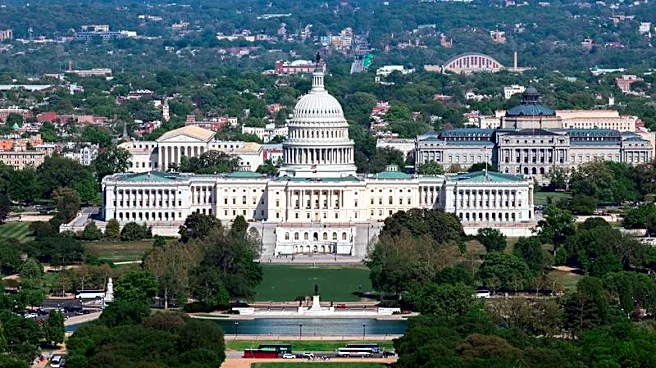
The U.S. Congress is currently embroiled in a debate over the War Powers Act as the conflict with Iran reaches the 60-day mark. Under the 1973 law, the president must obtain congressional approval to continue
military action beyond this period. However, lawmakers are divided on when the deadline actually occurs, with some arguing that ceasefire days should not count. The White House claims the conflict is over due to a ceasefire, while some lawmakers insist on the need for congressional oversight. The disagreement highlights ongoing tensions regarding the extent of presidential war powers and Congress's role in authorizing military action.
Why It's Important?
This debate is crucial as it underscores the constitutional balance of power between the executive and legislative branches regarding military engagements. The outcome could set a precedent for future conflicts, affecting how the U.S. engages in military actions abroad. The lack of consensus among lawmakers reflects broader political divisions and raises questions about the effectiveness of the War Powers Act in its current form. The decision on whether to authorize continued military action in Iran has significant implications for U.S. foreign policy, military strategy, and international relations, particularly in the volatile Middle East region.
What's Next?
As Congress returns from recess, lawmakers are expected to continue discussions on whether to formally authorize the conflict with Iran. Some senators have indicated plans to introduce measures requiring congressional approval for further military action. The administration may seek a 30-day extension under the War Powers Act, which could further complicate the situation. The debate is likely to intensify as lawmakers weigh the constitutional responsibilities of Congress against the president's authority to conduct military operations. The outcome will be closely watched by international allies and adversaries, as well as domestic stakeholders concerned about the implications for U.S. military policy.