








What's Happening?
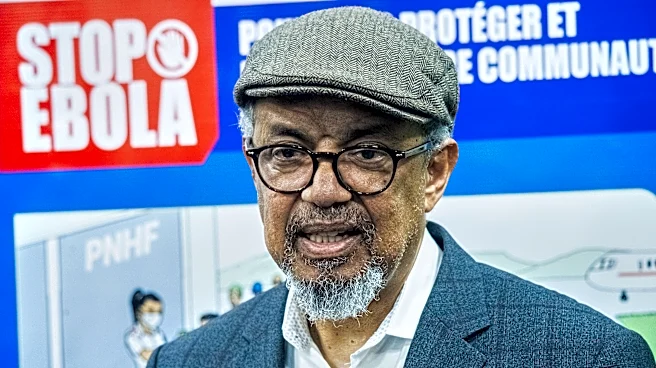
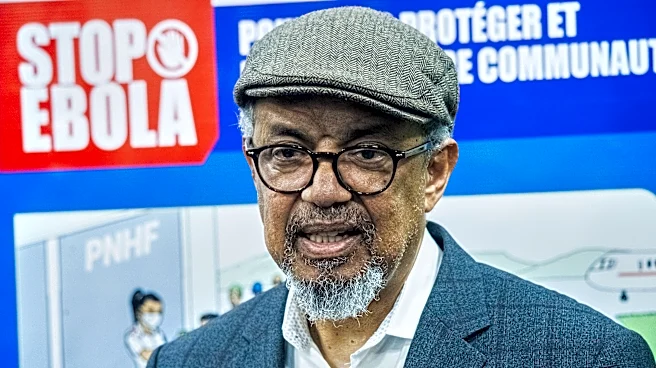
Cindy McCain, Executive Director of the U.N. World Food Programme, discussed the challenges of global food insecurity and the Ebola outbreak in Congo during an interview on 'Face the Nation.' McCain highlighted the record high number of people requiring
urgent food assistance and the insufficient funding received this year. She emphasized the need for a collective global effort to address these issues, noting that the U.S. is the largest donor but more international support is necessary. McCain also addressed the Ebola crisis in Congo, where emergency responders are struggling to manage the outbreak amid a backdrop of food insecurity affecting 27 million people.
Why It's Important?
The issues of food insecurity and the Ebola outbreak are interconnected challenges that require a comprehensive international response. The lack of adequate funding for food assistance programs exacerbates the vulnerability of affected populations, potentially leading to further humanitarian crises. McCain's call for global cooperation underscores the need for a unified approach to address these complex issues. The situation in Congo highlights the broader implications of health and food security on global stability and the importance of international solidarity in tackling such crises. The response to these challenges will have significant implications for global health, security, and economic stability.
What's Next?
The U.N. World Food Programme and other international organizations are expected to continue advocating for increased funding and support from the global community. Efforts to address food insecurity and the Ebola outbreak will likely involve scaling up logistics, supply chains, and on-the-ground operations. The international community will need to engage in diplomatic efforts to encourage more countries to contribute to these initiatives. The situation will require ongoing monitoring and adaptation of strategies to ensure effective responses to the evolving challenges.