







What's Happening?
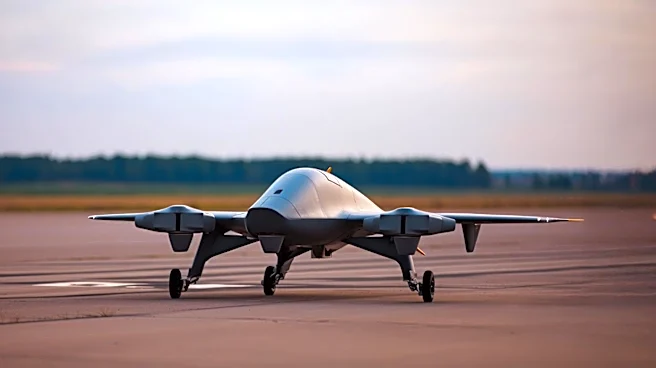
Shield AI, a defense technology company, expects to conduct the first flight of its X-BAT prototype unmanned fighter jet by the end of the year. The company is currently building two full-scale prototype vehicles, with the first anticipated to be completed
within weeks. Flight testing will commence with vertical takeoff and landing (VTOL) tests to de-risk the technology. The U.S. Navy has committed an additional $150 million to Shield AI for the continued development of the X-BAT, modifying an existing other transaction agreement. This new investment, which Shield AI will match with its own funds, brings the total planned development spending on the project to $400 million. The X-BAT project has been developed in collaboration with NAVAIR and NAWCAD, experts in naval aviation, and is funded through the Navy's Rapid Capability Cell. The company has also designated two sites for the production and flight testing of the autonomous jet. The Navy's funding is milestone-based, released as Shield AI achieves specific developmental objectives.
Why It's Important?
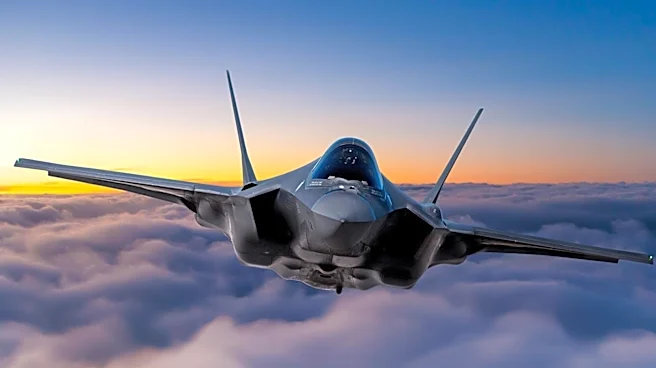
This development is significant for U.S. national security and the defense industry. The X-BAT represents a leap forward in autonomous aerial combat capabilities, potentially augmenting existing manned fighter fleets like the F-35 and F-16. The Navy's substantial investment underscores the strategic importance of unmanned combat aircraft in future military operations, aiming for an early operational capability by approximately 2029. This could lead to a paradigm shift in air warfare, offering multi-role capabilities and runway independence, which are crucial for flexible deployment in diverse operational environments. For the defense industry, it signals a growing market for advanced AI-driven autonomous systems, potentially creating new jobs and fostering technological innovation. Furthermore, Shield AI's intent to export the aircraft indicates a potential for the U.S. to maintain its leadership in defense technology globally, providing advanced capabilities to allies while also strengthening its own military posture. The cost-per-effect efficiency of such platforms could also influence future defense procurement strategies.
What's Next?
The immediate next steps for Shield AI involve the completion of the first X-BAT prototype and the commencement of flight testing by the end of the year, focusing initially on vertical takeoff and landing capabilities. As the company meets developmental milestones, it will continue to receive funding from the Navy, which will be crucial for advancing the project. Shield AI will also proceed with establishing its designated production and flight testing sites. Looking further ahead, the company aims to achieve an early operational capability for the X-BAT by around 2029, which will involve further testing, refinement, and integration into naval aviation strategies. Concurrently, Shield AI will likely continue to engage with international partners who have expressed interest in the X-BAT's multi-role capabilities, potentially leading to future export agreements. The success of these initial phases will be critical in securing follow-on phases of funding and solidifying the X-BAT's role in future defense architectures.
Beyond the Headlines
The development of the X-BAT unmanned fighter jet raises profound questions about the future of warfare and the role of artificial intelligence in combat. The concept of autonomous fighter jets operating alongside or independently of manned aircraft introduces complex ethical, legal, and operational challenges. Issues such as command and control, accountability in autonomous decision-making, and the potential for escalation in conflicts will need to be thoroughly addressed. This technology could also reshape geopolitical dynamics, as countries without the infrastructure for traditional fighter jets might acquire advanced air power through unmanned systems. Furthermore, the reliance on AI in such critical applications necessitates robust cybersecurity measures to prevent hacking or interference. The long-term implications include a potential shift in military doctrine, training, and resource allocation, as human pilots may transition from direct combat roles to supervisory or strategic functions. The X-BAT's development is not just about a new aircraft; it's about pioneering a new era of defense capabilities with far-reaching societal and strategic consequences.