






What's Happening?
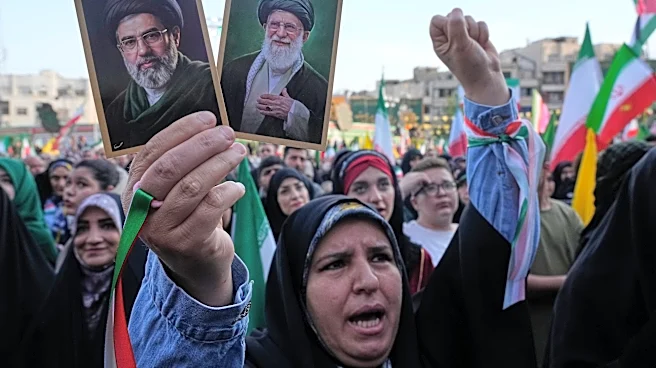
Iran has partially restored internet access after a prolonged shutdown that began during anti-government protests in January. The shutdown, justified by authorities as a wartime necessity following attacks by the United States and Israel, severely impacted
the country's connectivity and economy. Although access has been restored, users report slow and restricted service, with popular apps like YouTube and Instagram still heavily censored. The shutdown had significant economic repercussions, particularly for those reliant on online platforms for income. Businesses are gradually resuming online activities, but many content creators have suffered losses due to reduced visibility and engagement. The restoration comes as negotiators work towards a more permanent truce, but there remains a fear that access could be revoked again.
Why It's Important?
The internet shutdown in Iran highlights the critical role of digital connectivity in modern economies and societies. The prolonged outage not only disrupted communication but also exacerbated economic challenges, particularly for individuals and businesses dependent on online platforms. The situation underscores the vulnerability of digital economies to political and military conflicts, as well as the potential for government-imposed restrictions to stifle economic activity and personal freedoms. The restoration of internet access, albeit limited, is a crucial step towards economic recovery and social stability. However, the ongoing restrictions and the potential for future shutdowns continue to pose significant challenges for Iran's digital economy and its citizens' access to information.