






What's Happening?
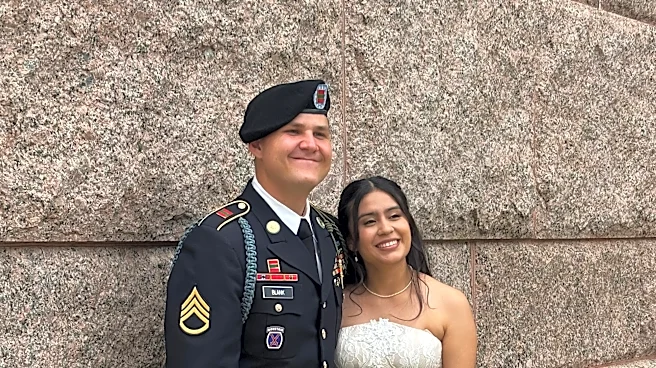
Immigration and Customs Enforcement (ICE) agents have arrested Annie Ramos, the newlywed wife of U.S. Army Staff Sergeant Matthew Blank, at Fort Polk, Louisiana. The arrest occurred as Ramos was attempting to register as a military spouse, just days after
their marriage. Ramos, who was born in Honduras, was issued a removal order in 2005 when she was 20 months old. Despite living in the U.S. for nearly two decades, she faces deportation to a country she has never known. Ramos is eligible for Deferred Action for Childhood Arrivals (DACA) but cannot apply due to a court-ordered halt on new applications. Her arrest has sparked criticism from advocates who argue that detaining a military spouse undermines family unity and military morale.
Why It's Important?
This incident highlights ongoing tensions and challenges within U.S. immigration policy, particularly concerning undocumented immigrants with deep ties to the country. The arrest of a military spouse underscores the complexities faced by families with mixed immigration statuses, especially those connected to military service. It raises questions about the balance between enforcing immigration laws and supporting military families. The case also draws attention to the broader implications of immigration enforcement on social and familial structures, potentially affecting military readiness and morale.
What's Next?
Sergeant Matthew Blank has vowed to continue fighting for his wife's release, emphasizing his commitment to both his country and his family. The case may prompt further discussions on immigration policy, particularly regarding the treatment of military families. Advocacy groups are likely to increase pressure on policymakers to reconsider current immigration enforcement practices. The situation could lead to legal challenges or policy reviews aimed at providing relief for individuals like Ramos, who have longstanding ties to the U.S. and are part of military families.