





What's Happening?
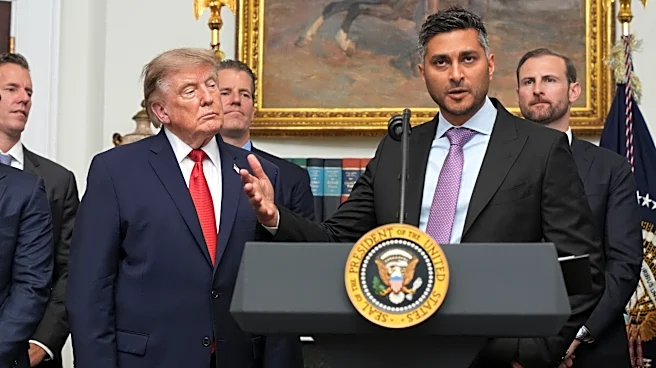
President Trump has agreed to significant ethics provisions within a sweeping cryptocurrency bill, the Clarity Act, which is slated for a pivotal Senate vote on Tuesday. Initially, the bill included a measure barring federally elected officials, their
spouses, and federal judges from issuing digital assets. However, key Democrats, along with Senator Thom Tillis (R-N.C.), pushed for more stringent measures due to concerns over President Trump's substantial crypto wealth. These additional demands included requiring the President to place his crypto holdings in a blind trust, divest when holdings reach a certain value, and crucially, allow state attorneys general to enforce the law alongside the Justice Department. After initial White House skepticism regarding state enforcement, President Trump ultimately agreed to approximately 80% of these proposals, including a 'meaningful role' for state attorneys general and a requirement to divest or blind trust significant crypto financial interests.
Why It's Important?
President Trump's agreement to these ethics provisions is a critical development for the $2.3 trillion cryptocurrency market, as it removes a major hurdle for the Clarity Act's passage. The bill aims to establish a much-needed regulatory framework for digital assets, which could legitimize the industry and foster greater institutional adoption in the U.S. The inclusion of stringent ethics rules, particularly those applying to the President, addresses concerns about potential conflicts of interest and aims to build public trust in the nascent crypto space. If passed, this legislation could significantly impact how crypto businesses operate, how investors engage with digital assets, and how political figures manage their financial interests in this evolving sector. The vote will determine whether Washington moves to cement crypto's legitimacy or if the industry will face continued regulatory uncertainty.
What's Next?
The Senate is scheduled to hold a pivotal vote on the Clarity Act on Tuesday. Despite President Trump's concessions on ethics, the bill's passage is not guaranteed, as some Democrats still express concerns about the ethics language. The outcome of this vote will be a watershed moment for the cryptocurrency industry in the U.S. If the bill passes, it will move closer to becoming law, providing a clearer regulatory environment. If it fails, the crypto industry may face continued regulatory ambiguity, potentially leading to increased lobbying efforts and campaign spending in future elections. The debate over the specifics of the ethics provisions and their enforcement will likely continue, regardless of the immediate outcome of the vote, as stakeholders assess the implications of these new rules.
Beyond the Headlines
President Trump's shift on crypto ethics provisions highlights the growing political influence of the cryptocurrency industry and the increasing scrutiny of financial interests among public officials. His initial reluctance and subsequent agreement underscore the complex interplay between personal wealth, political power, and policy-making in emerging sectors. The inclusion of state attorneys general in enforcement mechanisms is a significant development, reflecting a desire for broader oversight and accountability, especially in cases where federal enforcement might be perceived as compromised. This could set a precedent for future legislation involving high-profile financial interests and potentially lead to a re-evaluation of existing ethics laws for presidents. The long-term implications include a potential shift in how political leaders engage with and disclose their investments in rapidly evolving markets, fostering greater transparency but also potentially creating new challenges for public service.