



What's Happening?
David Hockney, a renowned Pop Art figure, has voiced strong opposition to the plan of moving the Bayeux Tapestry from France to the United Kingdom. The tapestry, a 950-year-old artifact depicting the Norman Conquest of England, is scheduled for a 10-month
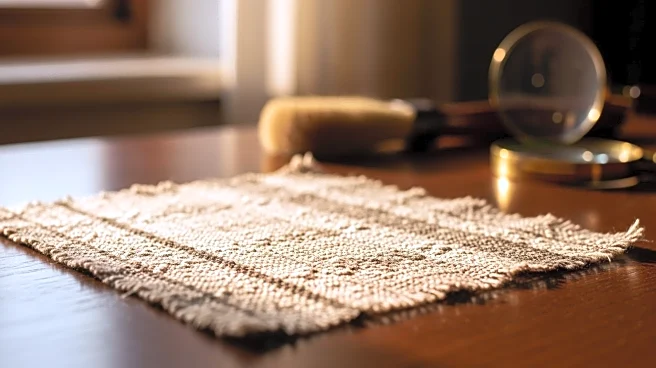
loan to the British Museum. While the announcement was initially met with enthusiasm, concerns have arisen regarding the tapestry's fragility. Hockney, who has a deep appreciation for the tapestry, having visited it multiple times, argues that the risks associated with transporting such a delicate piece are too great. He highlights the potential for damage due to changes in environmental conditions, which could lead to fiber contraction, expansion, or color fading. Despite assurances from the British Museum about their expertise in handling such materials, Hockney remains unconvinced, suggesting that an identical copy could be made instead.
Why It's Important?
The debate over the Bayeux Tapestry's relocation underscores the tension between cultural diplomacy and conservation ethics. The tapestry is not only a significant historical artifact but also a symbol of shared heritage between France and the U.K. The decision to move it involves weighing the prestige and educational value of displaying it in the U.K. against the potential risk of irreversible damage. This situation highlights broader issues in the art world regarding the preservation of fragile historical artifacts and the responsibilities of institutions in safeguarding cultural heritage. The outcome of this debate could influence future decisions on the loan and transport of similar artifacts worldwide.
What's Next?
The British Museum plans to proceed with the loan, having already moved the tapestry to a secure storage facility. However, ongoing discussions and criticisms, such as those from Hockney, may prompt further evaluations of the transport and display plans. The museum may need to engage more with conservation experts and the public to address concerns and ensure the tapestry's safety. Additionally, the suggestion of creating a replica could gain traction as a compromise, allowing the public to appreciate the tapestry's historical significance without risking the original.