









What's Happening?
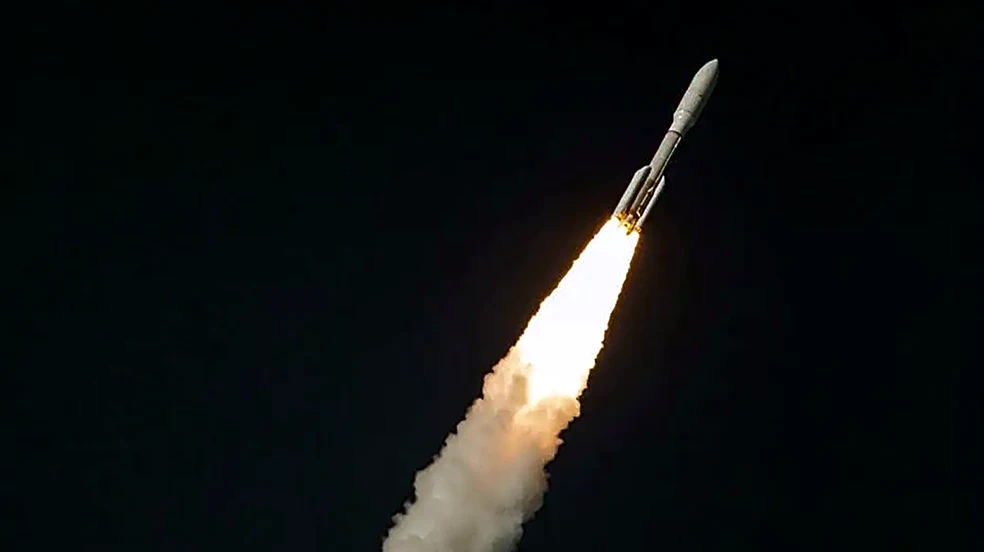
Lockheed Martin announced that its Extended-Range GMLRS (ER GMLRS) rocket is moving into production and fielding phases after successfully completing two Soldier-led operational tests. These tests, conducted in September and October, involved firing multiple
ER GMLRS Alternative Warhead (AW) and Unitary Warhead rockets in succession from an M270A2 launcher. The ER GMLRS is designed to extend the range of the existing GMLRS family of rockets to up to 150 kilometers while maintaining compatibility with the U.S. Army's HIMARS and M270 launchers. With the U.S. Army's approval, Lockheed Martin is now transitioning from technology proving to large-scale manufacturing and deployment of this capability.
Why It's Important?
The advancement of the ER GMLRS rocket into production significantly enhances the U.S. Army's long-range precision fires capabilities. By extending the strike range to 150 kilometers, the ER GMLRS provides a substantial tactical advantage, allowing U.S. forces to engage targets from greater distances, thereby increasing safety for personnel and improving operational flexibility. The compatibility with existing HIMARS and M270 launchers ensures a seamless integration into current military infrastructure, reducing training and logistical burdens. This development is critical for maintaining a technological edge in modern warfare, enabling the U.S. military to effectively counter threats across various operational theaters. The ability to field this technology at scale means a broader and more rapid enhancement of precision strike capabilities for both U.S. and international operators.
What's Next?
With the U.S. Army's approval, Lockheed Martin is now focused on the manufacturing and fielding of the ER GMLRS capability at scale. This transition signifies a move from developmental testing to mass production and deployment to military units. The company will prioritize ramping up production to meet the demand for this extended-range precision fire system. The continued compatibility with existing HIMARS and M270 launchers will facilitate its integration into current operational frameworks. This will involve logistical planning and coordination to ensure the efficient delivery and deployment of the ER GMLRS rockets to U.S. and potentially international forces, further solidifying its role in the global defense landscape.
Beyond the Headlines
The successful progression of the ER GMLRS rocket highlights a broader trend in military modernization towards longer-range, more precise, and adaptable weapon systems. This emphasis on extended range capabilities reflects a strategic imperative to operate effectively in contested environments, where the ability to strike from a distance can be crucial for survivability and mission success. The 'common foundation' approach, ensuring compatibility with existing launchers, underscores a smart acquisition strategy that maximizes efficiency and interoperability across different platforms and allied forces. This not only streamlines logistics and training but also enhances the collective defense posture of the U.S. and its partners. The continuous evolution of such systems also signals ongoing investment in advanced defense technologies, which has significant implications for the defense industry and national security policy.