







What's Happening?
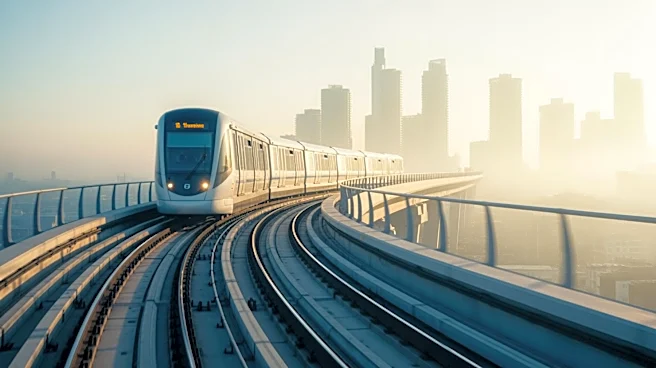
Seattle's Link light rail system has become the most ridden light rail system in the United States, with daily ridership surpassing 150,000. This surge follows the expansion of the 2 Line across Lake Washington, connecting Bellevue and Seattle for the first
time. The increase in ridership has propelled Sound Transit past other major U.S. cities, despite Seattle having a smaller metropolitan population. The expansion has been part of the Sound Transit 3 (ST3) plan, which aims to significantly increase the reach and capacity of the region's transit system. The recent ridership figures indicate a 44% increase in April compared to March, highlighting the impact of the new connection.
Why It's Important?
The rise in ridership for Seattle's light rail system underscores a significant shift towards public transportation in a city traditionally dominated by car travel. This development is crucial for reducing the city's carbon footprint and addressing climate change, as increased public transit use can lead to fewer cars on the road. The success of Seattle's transit expansion could serve as a model for other U.S. cities looking to improve their public transportation systems. Additionally, the increased ridership supports economic growth by improving accessibility and connectivity within the region, potentially attracting more businesses and residents.
What's Next?
Sound Transit plans to continue expanding its network, with future projects under the ST3 plan aiming to serve up to 650,000 daily riders by the 2040s. However, budgetary constraints have led to some project delays and modifications. Despite these challenges, the agency remains committed to enhancing the transit system, with upcoming projects including new lines and extensions. The continued growth in ridership is expected as the network expands and as public awareness and travel habits evolve. Adjustments to bus routes to better serve light rail stations are also anticipated to further boost ridership.