

What's Happening?
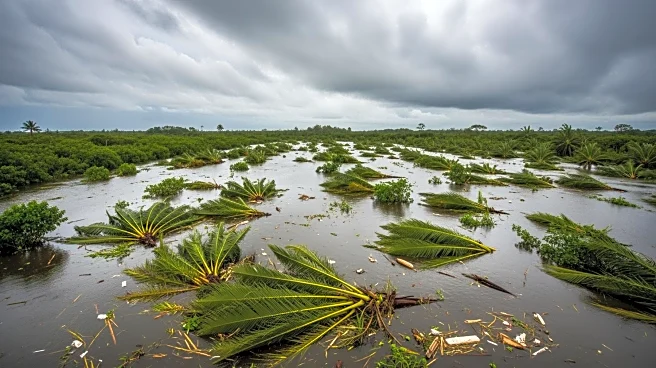
In March 2026, Hawaii experienced severe flooding due to back-to-back kona low-pressure systems, which brought torrential rains and destructive winds to the islands. The storms resulted in significant flooding across O'ahu, with rainfall totals reaching
up to 30 inches in some areas. The National Weather Service reported record-breaking rainfall in several locations, including Honolulu and Hilo. The flooding caused extensive damage to homes and farmland, with preliminary assessments indicating millions of dollars in losses. Additionally, the storms led to widespread power outages, affecting approximately 115,000 residents.
Why It's Important?
The recent flooding in Hawaii highlights the vulnerability of the islands to extreme weather events, which are becoming more frequent and intense due to climate change. The economic impact of such disasters is significant, affecting agriculture, infrastructure, and local communities. The response to these events requires coordinated efforts from federal and state agencies, as well as the implementation of long-term strategies to mitigate future risks. The activation of NASA's Disasters Response Coordination System underscores the importance of using advanced technology and data to support emergency management and recovery efforts.
What's Next?
As the immediate threat of flooding subsides, attention will shift to recovery and rebuilding efforts. Authorities will assess the full extent of the damage and prioritize the restoration of essential services, such as power and transportation. In the longer term, Hawaii may need to invest in infrastructure improvements and climate adaptation measures to enhance resilience against future storms. Continued monitoring of weather patterns and collaboration with scientific organizations like NASA will be crucial in developing effective strategies to protect the islands from similar events in the future.