


What's Happening?
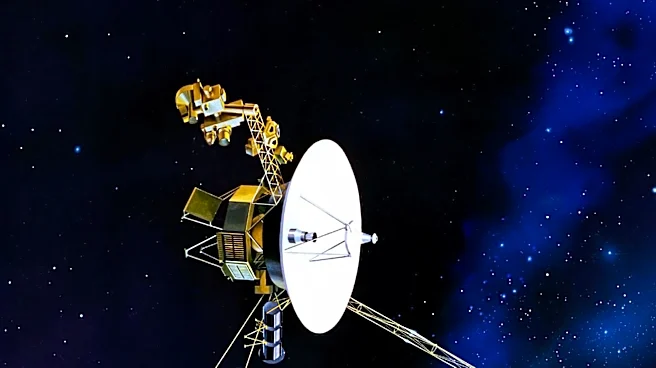
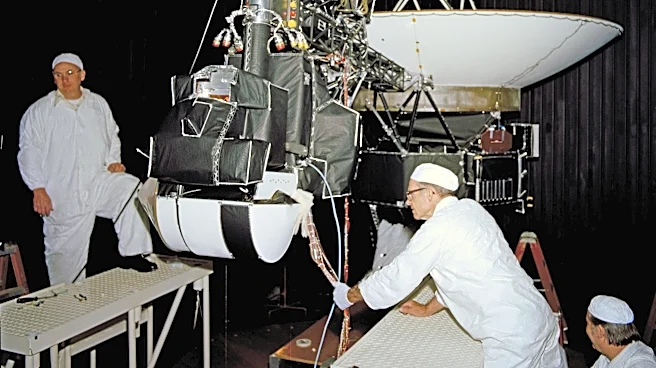
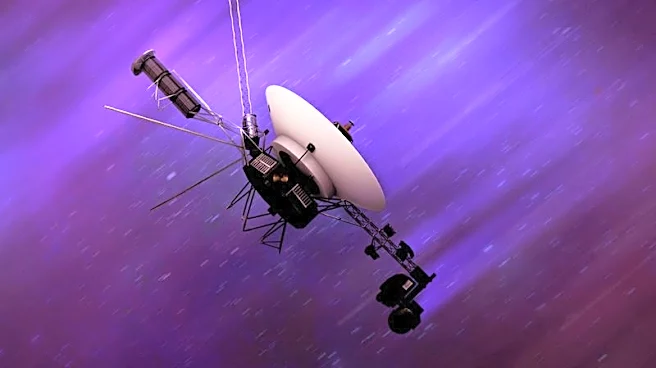
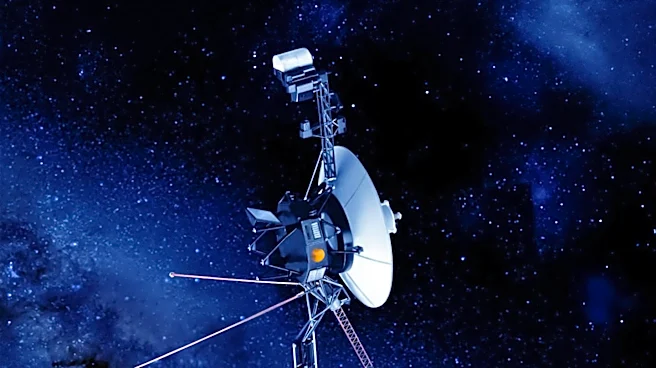
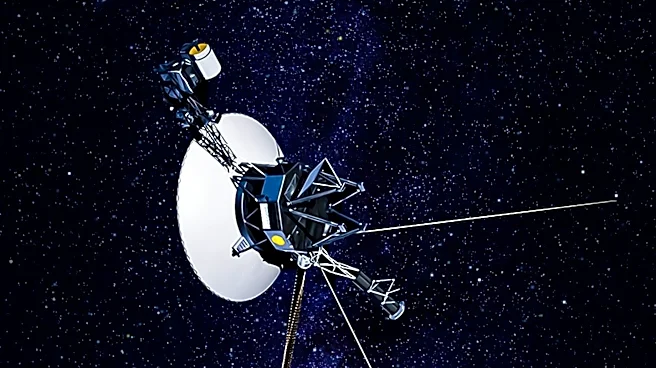
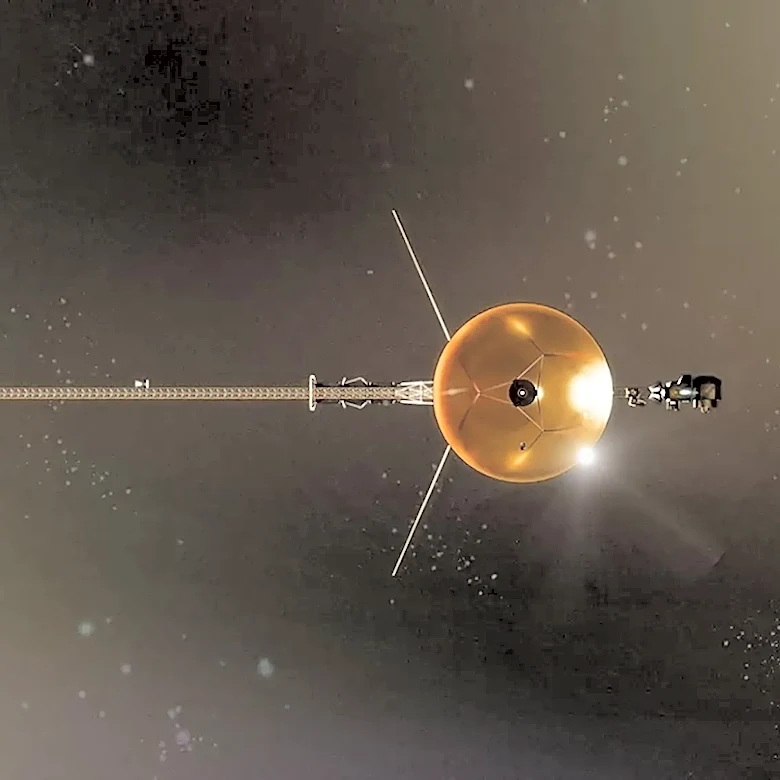
NASA's Voyager 1 and Voyager 2 spacecraft, launched in 1977, continue their historic journey, with Voyager 1 now being the most distant human-made object from Earth, having entered interstellar space in 2012, followed by Voyager 2 in 2018. Originally
designed for a five-year mission to study the outer planets, the probes have far exceeded expectations, providing unprecedented data on Jupiter, Saturn, Uranus, and Neptune, along with their moons and rings. The missions discovered active volcanism on Io, evidence of an ocean on Europa, and new moons around the gas giants. Both spacecraft carry a 'Golden Record'—a message from humanity for any extraterrestrial life. Despite dwindling power, some instruments remain operational, sending back data from the heliosphere's edge and beyond, with engineers carefully managing power resources to extend their operational life.
Why It's Important?
The Voyager mission is profoundly important for its contributions to planetary science and our understanding of the solar system and interstellar space. It provided the first close-up images and data of Uranus and Neptune, revolutionizing our knowledge of these distant worlds. The discovery of active geological processes on moons like Io and Triton expanded our understanding of planetary dynamics. Entering interstellar space, the Voyagers are now providing direct measurements of the environment beyond the Sun's influence, offering insights into the heliosphere's boundary and the nature of cosmic rays. This mission represents humanity's farthest reach into space, inspiring generations and pushing the boundaries of engineering and scientific exploration. The longevity of the spacecraft also demonstrates remarkable technological resilience.
What's Next?
As the Voyager spacecraft continue to travel further into interstellar space, NASA engineers are focused on managing their dwindling power supplies to keep essential instruments operational for as long as possible. Instruments are being selectively shut down to conserve power, with the goal of extending the mission's data collection capabilities. The team hopes to maintain communication and data reception until at least 2027, marking 50 years since launch. Future data from the Voyagers will continue to provide unique insights into the interstellar medium, helping scientists understand the environment between stars. Eventually, as power completely depletes, the spacecraft will continue their silent journey through the galaxy, carrying humanity's message into the cosmos.
Beyond the Headlines
The Voyager mission transcends scientific discovery, embodying humanity's innate drive to explore and understand its place in the universe. The 'Golden Record' serves as a profound cultural artifact, a time capsule of Earth's diversity and achievements, intended for an unknown future recipient. This aspect raises philosophical questions about humanity's legacy and our potential connection with extraterrestrial intelligence. The mission also highlights the long-term commitment required for deep space exploration, with projects spanning decades and involving multiple generations of scientists and engineers. The Voyagers are not just scientific probes; they are silent ambassadors, carrying the story of Earth far beyond our solar system, representing a testament to human ingenuity and curiosity.