








What's Happening?
Researchers at The University of Texas at San Antonio are developing a non-toxic biologic aimed at reducing the spread of Lyme disease by targeting small wild animals that carry the bacteria responsible for the disease. This innovative approach focuses
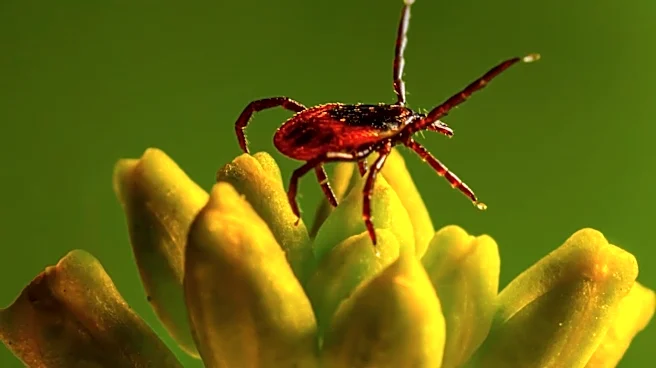
on 'reservoir hosts' such as squirrels, chipmunks, and white-footed mice, which are natural carriers of the bacteria. The product, which could eventually be available in home improvement stores, is designed to prevent these animals from transmitting the bacteria to ticks, which then pass it on to humans and pets. The research team, led by Professor Janakiram Seshu, has developed pathogen-derived biologics that trigger an immune response in these animals, significantly reducing the bacterial load and thereby the risk of transmission.
Why It's Important?
This development is significant as it represents a shift in Lyme disease prevention strategies from individual protection to environmental control. By reducing the bacterial load in wild animals, the risk of ticks acquiring and spreading the disease is minimized, potentially decreasing the incidence of Lyme disease in humans. This approach could provide a new layer of protection, complementing existing preventive measures such as insect repellents and protective clothing. With approximately 476,000 people diagnosed with Lyme disease annually in the U.S., this innovation could have a substantial impact on public health by reducing the prevalence of this tick-borne illness.
What's Next?
The first version of the product is expected to be available as treated bait pellets for use in residential areas. These pellets will help reduce the bacterial load in small mammals, thereby lowering the risk of Lyme disease transmission. Researchers are also exploring the potential to expand this technology to target multiple tick-borne pathogens, aiming to create a broader protective measure against various diseases transmitted by ticks. If successful, this could lead to a paradigm shift in how Lyme disease and other tick-borne illnesses are managed, focusing on environmental control rather than solely on personal protection.