






What's Happening?
Voters in several U.S. communities have recently rejected the use of automated license plate readers (ALPRs) and other surveillance technologies. In York, Maine, nearly three-quarters of voters supported a local initiative to remove existing ALPR cameras
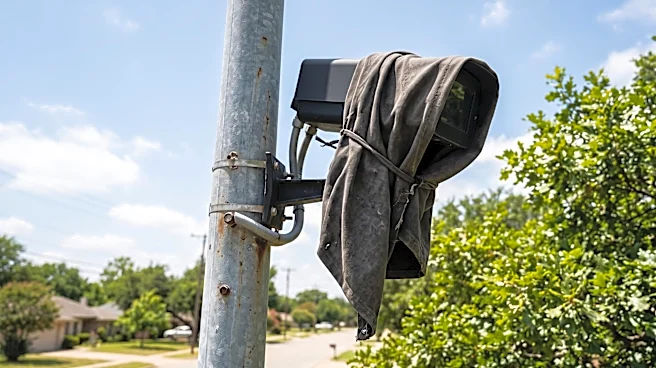
and require future installations to receive voter approval. This measure was placed on the ballot after constituents gathered sufficient signatures for a citizens' petition. Similarly, in League City, Texas, voters decided against allowing their local police department to continue using ALPR cameras. Following this vote, which was formally approved on November 17, a 72-hour window began for the removal of these cameras, which have since been covered to prevent data collection. Additionally, Pflugerville, Texas, passed Proposition B, amending its City Charter to include protections governing the collection, use, retention, and oversight of data, facial recognition, and surveillance technologies, also mandating a responsible artificial intelligence framework.
Why It's Important?
These votes signify a growing public concern over mass surveillance and data collection by local authorities. The decisions in Maine and Texas demonstrate that when presented as a policy choice, communities are willing to reject technologies like ALPRs, which can collect vast amounts of personal data. This trend empowers local residents to have a direct say in privacy matters, potentially influencing other municipalities to consider similar ballot initiatives or ordinances. The Electronic Frontier Foundation (EFF) has supported these local efforts, highlighting that surveillance is a choice, not a mandate. The outcomes underscore a broader movement towards greater transparency and accountability in the deployment of surveillance tools, potentially leading to more stringent regulations on how law enforcement agencies utilize such technologies across the nation.
What's Next?
The immediate next steps involve the physical removal of ALPR cameras in York, Maine, and League City, Texas, as per the voters' decisions. In Pflugerville, Texas, the city will need to implement the newly mandated protections and develop a responsible artificial intelligence framework as required by Proposition B. These local victories could inspire other communities across the U.S. to pursue similar ballot measures or engage in city council discussions regarding surveillance technology. Advocacy groups like the EFF are likely to continue supporting local initiatives, providing resources and guidance for citizens seeking to challenge or regulate surveillance tools in their areas. This could lead to a patchwork of local regulations concerning surveillance, potentially prompting broader state or federal discussions on data privacy and technology oversight.
Beyond the Headlines
The rejection of ALPRs and other surveillance technologies at the local level reflects a deeper societal debate about privacy in the digital age and the balance between security and civil liberties. These votes highlight a public desire for greater control over personal data and a skepticism towards the unchecked expansion of surveillance capabilities. Ethically, the decisions raise questions about the appropriate limits of government monitoring and the potential for mission creep with data collection technologies. Legally, these local ordinances could set precedents for how communities can assert their rights against pervasive surveillance, potentially influencing future court challenges or legislative actions. Culturally, it signals a growing awareness and activism among citizens regarding their digital rights, suggesting a long-term shift towards more community-driven oversight of technological deployments that impact daily life.