







What's Happening?
PG&E has submitted a 10-year Electrical Undergrounding Plan to the California Office of Energy Infrastructure Safety. This initiative aims to enhance grid safety and reliability in areas across northern and central California that are at high risk for wildfires.
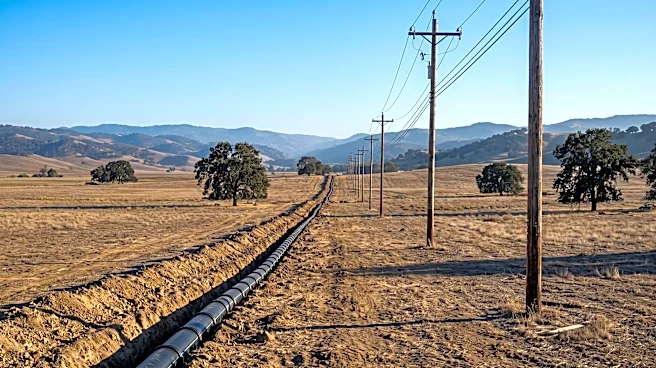
The plan involves placing approximately 5,000 miles of electricity distribution lines underground between 2028 and 2037. The utility will prioritize areas where undergrounding is expected to yield the most significant reduction in wildfire risks. This extensive project is projected to span over 30 counties. PG&E anticipates substantial long-term benefits, estimating $117 billion through wildfire prevention and reduced outages, alongside avoiding roughly $6 billion in vegetation management, operations, and maintenance costs. This comes after PG&E emerged from bankruptcy in 2020, following its equipment being linked to several deadly fires. The company also announced in early September its intention to defer about $2 billion in investments next year as part of a strategic review of its businesses.
Why It's Important?
This plan is crucial for California, a state frequently impacted by devastating wildfires, many of which have been linked to utility infrastructure. By undergrounding power lines, PG&E aims to significantly mitigate the risk of its equipment sparking new fires, thereby protecting lives, property, and natural resources. The projected $117 billion in long-term benefits underscores the immense economic and societal cost of wildfires, highlighting the potential for substantial savings and increased stability for communities. For PG&E, this initiative is a critical step in rebuilding trust and ensuring its long-term viability, especially given its past bankruptcy due to wildfire liabilities. The deferral of $2 billion in investments, coupled with a strategic review, indicates the company's focus on financial prudence and risk management in the face of ongoing wildfire challenges and regulatory scrutiny. This move could set a precedent for other utilities operating in high-risk areas, influencing infrastructure investment and wildfire prevention strategies nationwide.
What's Next?
The proposed 10-year Electrical Undergrounding Plan will now undergo review by the California Office of Energy Infrastructure Safety. Approval of the plan would initiate a multi-decade effort to transform California's electrical grid in high-risk areas. PG&E will need to secure necessary permits, allocate resources, and coordinate with local communities across the more than 30 counties involved. The company's strategic review of its businesses and the deferral of $2 billion in investments will likely continue, potentially leading to further adjustments in its operational and financial strategies. Stakeholders, including state regulators, environmental groups, and affected communities, will closely monitor the implementation and effectiveness of the undergrounding project. The success of this plan could influence future regulatory decisions regarding utility infrastructure and wildfire prevention, potentially leading to similar mandates or incentives for other power providers in fire-prone regions.
Beyond the Headlines
The undergrounding initiative by PG&E represents a significant shift in how utilities approach infrastructure development and risk management in the face of climate change and increasing natural disasters. Beyond the immediate benefits of wildfire prevention, this project could foster greater public confidence in utility services, which has been severely eroded by past incidents. The substantial investment in undergrounding reflects a broader societal recognition of the need for resilient infrastructure, moving beyond reactive measures to proactive prevention. This effort also highlights the complex interplay between corporate responsibility, regulatory oversight, and environmental protection. The long-term success of this plan could redefine the standard for utility operations in vulnerable areas, potentially influencing engineering practices, safety protocols, and financial models across the energy sector. It also raises questions about the equitable distribution of costs and benefits, ensuring that all communities, especially those most vulnerable, receive adequate protection.