
What's Happening?
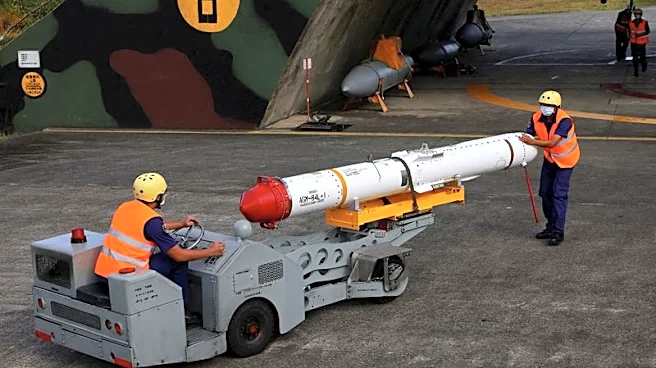
President Donald Trump has indicated the possibility of a direct phone call with Taiwan's President Lai Ching-te, despite warnings from China. This potential engagement follows a $14 billion arms sale
to Taiwan approved by Congress, which Trump has yet to finalize. The call would mark a significant shift in U.S.-Taiwan relations, as it would be the first direct dialogue between sitting American and Taiwanese presidents in decades. China has expressed strong opposition, viewing Taiwan as a breakaway province and warning that such a call could undermine U.S.-China relations. Trump's previous interactions with Taiwan, including a congratulatory call from then-President Tsai Ing-wen in 2016, have already strained ties with Beijing.
Why It's Important?
The potential call between President Trump and Taiwan's President Lai could have significant geopolitical implications. It may escalate tensions between the U.S. and China, affecting diplomatic and economic relations. The arms sale to Taiwan is seen as a strategic move to bolster Taiwan's defense capabilities against Chinese aggression. However, it also risks provoking China, which has historically reacted strongly to U.S. support for Taiwan. The situation underscores the delicate balance the U.S. must maintain in its 'One China' policy, which recognizes China's claim over Taiwan while supporting Taiwan's self-defense. The outcome of this situation could influence U.S. foreign policy and its approach to China and Taiwan.
What's Next?
If President Trump proceeds with the call, it could lead to increased diplomatic tensions with China. The U.S. may face pressure to clarify its stance on Taiwan and its commitment to the arms sale. Taiwan's President Lai has expressed readiness for the call, emphasizing the importance of peace and stability in the Taiwan Strait. The U.S. administration will need to navigate these complex dynamics carefully to avoid escalating conflicts. The decision on the arms sale and the potential call will be closely watched by international stakeholders, as they could set precedents for future U.S.-Taiwan-China relations.