
What's Happening?
Iranian-Americans are closely watching the ongoing protests in Iran, which have been sparked by severe economic hardships. The demonstrations, now in their sixth day, have turned deadly as citizens protest against the government's handling of the economy,
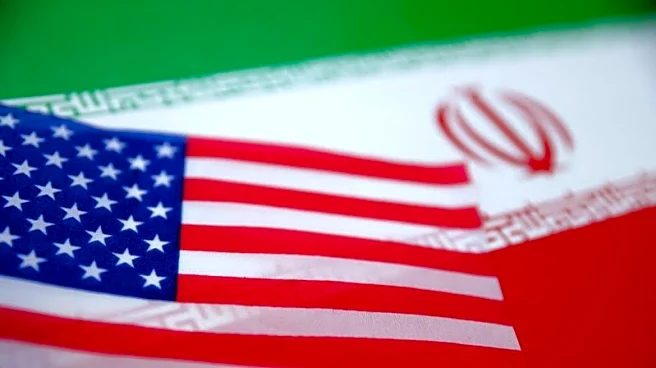
which has been severely impacted by U.S. and U.N. sanctions. These sanctions have cut off Iran's access to financial markets, leading to a currency collapse and soaring inflation. The Iranian rial has lost about half its value against the dollar, with inflation reaching 42.5% in December 2025. Basic necessities like food and gasoline have become unaffordable for many, with food prices jumping 72% and health-related costs rising by 50% from the previous year. Iranian-Americans, many of whom left the country due to political and economic instability, are hopeful that these protests might lead to significant change in Iran.
Why It's Important?
The protests in Iran are significant as they highlight the severe economic challenges faced by the country due to international sanctions. These sanctions, primarily imposed by the U.S., have targeted key sectors of Iran's economy, exacerbating the financial crisis and leading to widespread public discontent. The situation in Iran is a critical issue for U.S. foreign policy, as it involves balancing sanctions with the potential for humanitarian crises. The protests also underscore the broader geopolitical tensions in the region, particularly concerning Iran's support for groups like Hamas and Hezbollah. For Iranian-Americans, the protests represent a potential turning point for their homeland, with hopes for improved human rights and economic conditions.
What's Next?
The future of the protests in Iran remains uncertain, with the potential for increased government crackdowns. Iranian-Americans and international observers are watching closely to see if the protests will lead to any political changes or reforms. The U.S. government, under President Trump, has expressed support for the protesters, warning Iran against violent repression. This international attention could influence the Iranian government's response. However, there is also the risk of further oppression before any significant change occurs. The situation remains fluid, with the potential for both escalation and resolution.
Beyond the Headlines
The protests in Iran are not just about economic grievances but also reflect deeper issues of governance and human rights. The Iranian regime's focus on regional influence and support for militant groups has come at the expense of domestic welfare, leading to widespread dissatisfaction. The protests could signal a shift in public sentiment, with increasing calls for regime change. This situation also highlights the role of the Iranian diaspora, particularly in the U.S., in advocating for change and supporting their compatriots back home. The outcome of these protests could have long-term implications for Iran's political landscape and its relations with the international community.