



What's Happening?
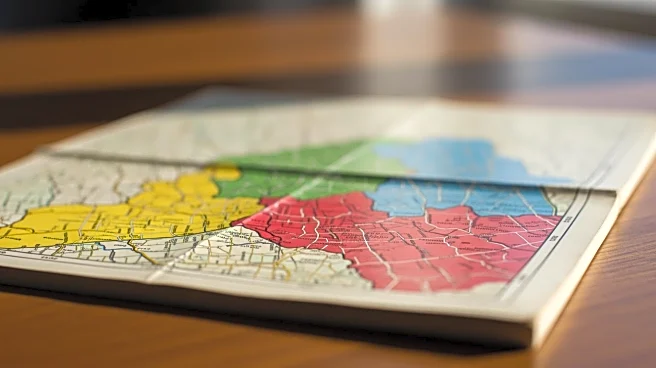
Tonika Lewis Johnson's Folded Map Project is drawing attention to the segregation in Chicago by comparing neighborhoods on the North and South Sides. The project involves photographing homes and interviewing residents from corresponding addresses, known
as 'map twins,' to highlight disparities in property values and living conditions. Johnson, a MacArthur fellow and Columbia alum, initiated this project to showcase the impact of historical discriminatory housing practices and ongoing disinvestment in Black and Brown neighborhoods. The project has evolved to include a book co-authored with sociologist Maria Krysan, titled 'Don’t Go: Stories of Segregation and How to Disrupt It,' which compiles stories from Chicagoans about their experiences with segregation.
Why It's Important?
The Folded Map Project is significant as it brings to light the persistent issue of segregation in Chicago, which is more pronounced than in any other U.S. city according to Brown University data. By facilitating conversations between residents of different neighborhoods, the project aims to foster understanding and challenge systemic racism. This initiative not only raises awareness but also encourages individuals to take small actions, such as visiting different neighborhoods, to disrupt segregation. The project underscores the need for systemic change and personal reflection to address the deep-rooted issues of racial and economic inequality.
What's Next?
The Folded Map Project continues to engage communities and policymakers in discussions about segregation and its impacts. Johnson's work, including public events and her book, aims to inspire individuals to reflect on their own biases and take action to promote integration. The project may influence local policies and encourage more equitable investment in underserved neighborhoods. As awareness grows, there could be increased pressure on city officials to address the systemic issues contributing to segregation.
Beyond the Headlines
The project highlights the ethical and cultural dimensions of segregation, emphasizing the importance of acknowledging and addressing historical injustices. By creating a platform for dialogue, the Folded Map Project encourages a cultural shift towards inclusivity and equity. It also serves as a model for other cities facing similar challenges, demonstrating how community engagement can drive social change.