






What's Happening?
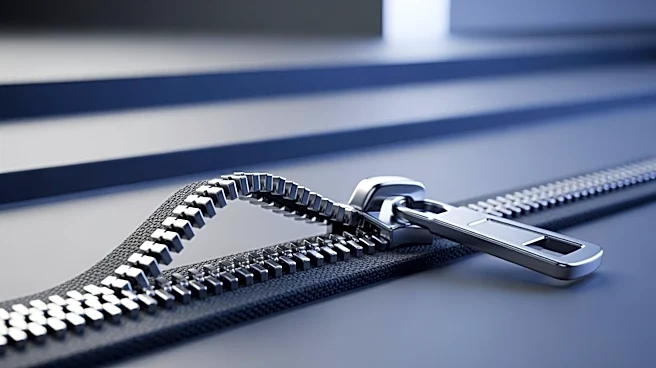
MIT's Computer Science and Artificial Intelligence Laboratory (CSAIL) has developed a novel three-sided zipper, known as the Y-zipper, which can transform between soft and rigid states. This innovation, originally conceptualized by William Freeman in 1985,
has been revived using modern fabrication technology. The Y-zipper can be used in various applications, such as camping equipment, medical gear, and robotics, offering rapid and reversible assembly. The design allows for customizable zippers that can be printed using 3D technology, enabling users to create structures that can quickly change form. This development was presented at the 2026 CHI Conference on Human Factors in Computing Systems.
Why It's Important?
The Y-zipper represents a significant advancement in material science and design, offering potential benefits across multiple industries. In the medical field, it could lead to more adaptable and comfortable wearables, such as adjustable wrist casts. In robotics, the Y-zipper could enable robots to navigate complex terrains by altering their physical structure. Additionally, the technology could aid in rapid deployment of shelters during emergencies, providing a practical solution for disaster relief efforts. The ability to switch between flexible and rigid states could also inspire new designs in art installations and other creative fields.
What's Next?
Future developments may focus on enhancing the durability of the Y-zipper by using stronger materials like metal. Researchers are also exploring larger-scale applications, which could expand the zipper's use in fields such as space exploration, where it might be used to collect rock samples. The team plans to continue testing the zipper's capabilities and explore additional applications that could benefit from its unique properties.
Beyond the Headlines
The Y-zipper's ability to bridge the gap between soft and rigid states could lead to innovations in embodied intelligence, impacting how we design and interact with everyday objects. This technology challenges traditional notions of material use and could pave the way for more sustainable and efficient design practices. The potential for rapid assembly and disassembly also raises questions about the future of manufacturing and construction, where such technologies could reduce labor and material costs.