
What's Happening?
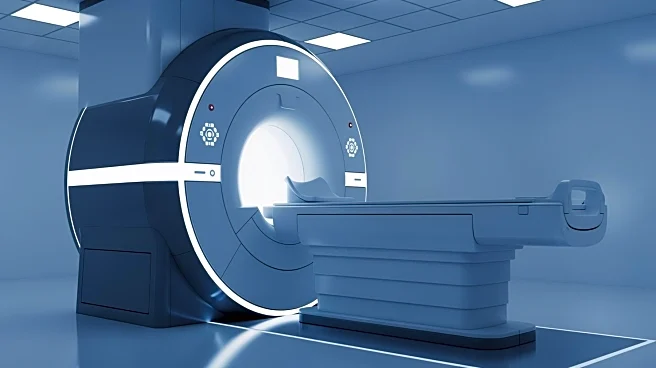
A recent column explores the growing trend of full-body MRI scans, which are being promoted by longevity experts as a way to detect potential health issues early. These scans, which use advanced diffusion-weighted
imaging and artificial intelligence, can identify abnormalities as small as 2 millimeters, potentially catching diseases like cancer and aneurysms before they become life-threatening. However, the scans are costly, priced at $2,500 each, and are not covered by insurance. They also have a high rate of false positives, leading to unnecessary biopsies and associated risks. The American College of Radiology currently advises against routine full-body screening due to insufficient evidence of its benefits. Despite this, some medical professionals believe that as more data becomes available, these scans could become a common practice in preventive medicine.
Why It's Important?
The introduction of full-body MRI scans represents a significant advancement in medical technology, offering the potential to revolutionize how diseases are detected and managed. For individuals, this could mean earlier detection of serious health conditions, potentially improving outcomes and survival rates. However, the high cost and risk of false positives pose significant challenges. The scans are currently accessible primarily to wealthier individuals, raising concerns about healthcare equity. Additionally, the psychological impact of false positives and the potential for overdiagnosis could lead to increased anxiety and unnecessary medical procedures. As the technology evolves, it will be crucial to balance the benefits of early detection with the risks of overtesting and the financial burden on patients.
What's Next?
As the use of full-body MRI scans becomes more widespread, there will likely be increased pressure on insurance companies to cover these procedures, potentially making them more accessible. Ongoing research and data collection will be essential to determine the true efficacy and cost-effectiveness of these scans. Medical professionals and regulatory bodies will need to establish clear guidelines to ensure that the benefits of early detection are maximized while minimizing the risks of false positives and unnecessary interventions. The healthcare industry may also see a push towards integrating these scans into routine preventive care, provided that their value is proven through further studies.
Beyond the Headlines
The rise of full-body MRI scans highlights broader ethical and cultural questions about the role of technology in healthcare. As medical imaging becomes more advanced, society must grapple with the implications of having detailed knowledge of one's health status. This could lead to a shift in how individuals perceive their health and make medical decisions. The technology also raises questions about privacy and data security, as sensitive health information becomes more readily available. As these scans become more common, there will be a need for robust policies to protect patient data and ensure that the benefits of these technologies are equitably distributed.