



What's Happening?
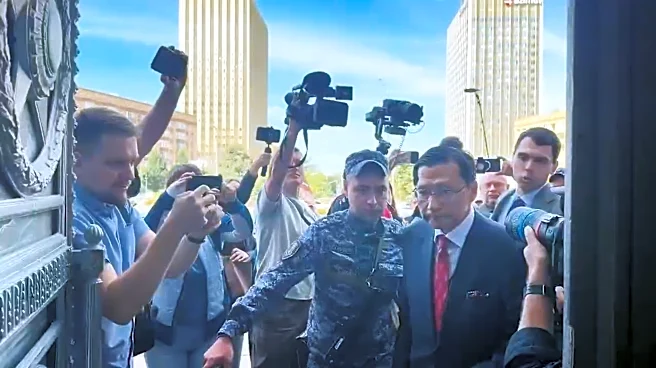
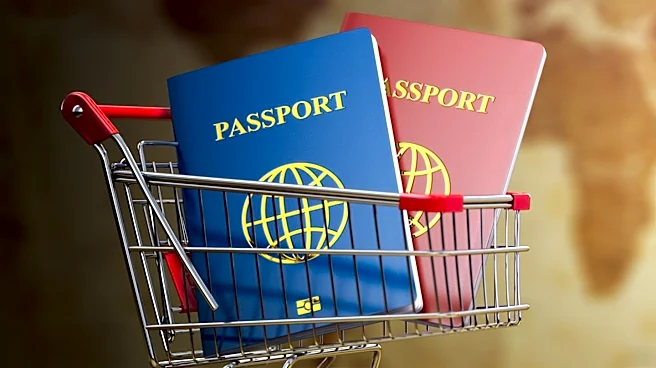
During an official visit to Moscow, Ghana's Minister for Foreign Affairs, Samuel Okudzeto Ablakwa, and Russian Foreign Minister Sergey Lavrov signed an agreement to allow visa-free entry for diplomatic and service passport holders from both nations. This
agreement aims to foster stronger bilateral cooperation across various sectors. Foreign Minister Lavrov emphasized the importance of this development for enhancing contacts between the two governments in areas such as foreign ministries, economy, trade, investments, humanitarian exchanges, and education. The Ghanaian minister echoed these sentiments, highlighting that the agreement is a significant step in expanding relations and cooperation, building on previous advancements between Accra and Moscow. The discussions also covered broader goals of boosting trade, investment, and government-to-government relationships, as well as strengthening ties through education and humanitarian exchanges.
Why It's Important?
This agreement signifies a strategic move by both Russia and Ghana to deepen their diplomatic and economic ties. For Russia, expanding visa-free access for diplomats can facilitate its engagement with African nations, potentially opening new avenues for trade and political influence on the continent. For Ghana, the agreement streamlines official travel, which can accelerate negotiations and collaborations in critical sectors like commerce, investment, and education. This could lead to increased foreign direct investment from Russia into Ghana and enhanced educational opportunities for Ghanaian citizens. The emphasis on humanitarian exchanges also suggests a potential for cultural and social benefits, fostering a more robust relationship beyond just economic interests. The move reflects a broader trend of nations seeking to diversify their international partnerships and reduce reliance on traditional alliances.
What's Next?
Following the signing of this agreement, both Ghana and Russia are expected to implement the necessary administrative procedures to facilitate visa-free travel for their respective diplomatic and service passport holders. This will likely involve updating travel advisories and informing relevant government agencies about the new policy. The agreement is anticipated to pave the way for more frequent high-level visits and working group meetings, further solidifying cooperation in the identified areas of trade, investment, education, and humanitarian exchanges. Future discussions may focus on expanding visa-free travel to other categories of citizens or exploring additional bilateral agreements to enhance economic and political collaboration. The success of this initial agreement could serve as a model for similar arrangements with other countries.
Beyond the Headlines
The establishment of visa-free travel for diplomats between Russia and Ghana carries deeper implications for international relations and global power dynamics. It underscores Russia's continued efforts to strengthen its presence and influence in Africa, a continent increasingly becoming a battleground for geopolitical competition. By fostering closer ties with nations like Ghana, Russia aims to counter the influence of Western powers and secure access to valuable resources and markets. For Ghana, this agreement represents a pragmatic approach to foreign policy, seeking to diversify its international partnerships and leverage opportunities from various global actors. It highlights a growing trend among African nations to pursue independent foreign policies that prioritize their national interests, rather than aligning exclusively with any single bloc. This could lead to a more multipolar international system where African countries play a more significant role.