





What's Happening?
Oklahoma City Archbishop Paul S. Coakley, who also serves as the president of the U.S. Conference of Catholic Bishops, has formally requested President Trump to cease the deportation of Haitians from the United States. In a letter to the President, Coakley highlighted
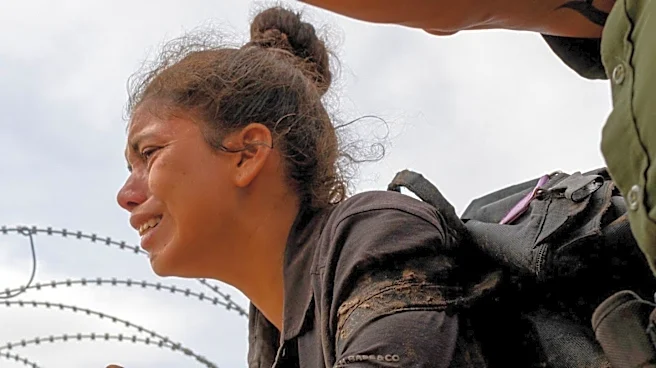
the severe increase in violence and instability within Haiti. He specifically cited a recent incident in Port-au-Prince where gang members brutally murdered at least 47 people, injured over 20, and kidnapped more than 50, including displaced families and young children seeking shelter in a church. Coakley's plea follows the Trump administration's decision to end Temporary Protected Status (TPS) for Haitians in August, a move that affected over 330,000 individuals. The Archbishop urged President Trump to exercise his constitutional authority to provide deferred enforced departure for Haitians currently residing peacefully in the U.S., emphasizing the humanitarian crisis unfolding in their home country.
Why It's Important?
Archbishop Coakley's intervention underscores the significant moral and humanitarian concerns surrounding U.S. immigration policy towards Haiti. His appeal from a prominent religious leader highlights the ethical dimensions of deporting individuals to a country experiencing extreme violence and instability. The request challenges the administration's current stance on immigration enforcement, particularly concerning vulnerable populations. If President Trump were to heed this call, it could signal a shift in policy, potentially offering relief to thousands of Haitians in the U.S. and altering the trajectory of U.S.-Haiti relations. Conversely, a continued policy of deportation could exacerbate Haiti's internal crisis, potentially leading to further destabilization and increased humanitarian needs, which could have broader implications for regional stability in the Western Hemisphere.
What's Next?
As of the time of the report, President Trump had not yet responded to Archbishop Coakley's letter. The immediate next step would be a formal response from the White House, which could either acknowledge the concerns and indicate a review of policy or reaffirm the current stance on deportations. Stakeholders, including human rights organizations, immigrant advocacy groups, and religious communities, will likely continue to pressure the administration for a change in policy. The U.S. Conference of Catholic Bishops may also continue its advocacy efforts. The situation in Haiti itself will remain a critical factor, with ongoing violence potentially increasing the urgency for a humanitarian response from the U.S. government. Future legal challenges to deportation policies could also emerge, depending on the administration's actions.
Beyond the Headlines
This situation delves into the complex interplay between national sovereignty, immigration law, and humanitarian obligations. The Archbishop's reference to American ideals of unalienable rights, regardless of birthplace, invokes a foundational principle of U.S. identity, challenging the practical application of immigration enforcement in times of international crisis. It also highlights the role of religious institutions as moral arbiters in public policy debates, often advocating for vulnerable populations. The long-term implications could include a re-evaluation of how the U.S. balances its immigration laws with its humanitarian responsibilities, especially for countries experiencing severe internal conflict. This could set precedents for future responses to similar crises globally, influencing international norms around refugee protection and deferred departure policies.