







What's Happening?
NASA's Artemis 2 mission has successfully concluded with the safe return of its astronauts to Earth. The mission, which marked the first crewed lunar mission since the Apollo program ended in 1972, involved a 10-day journey around the moon. The crew,
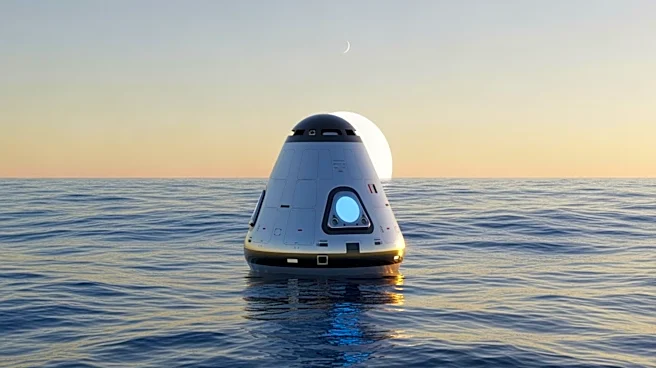
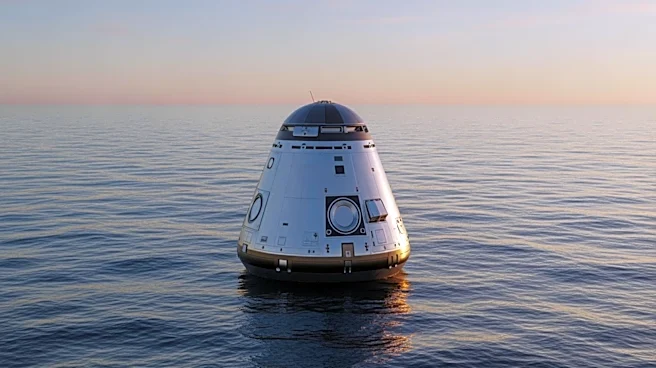
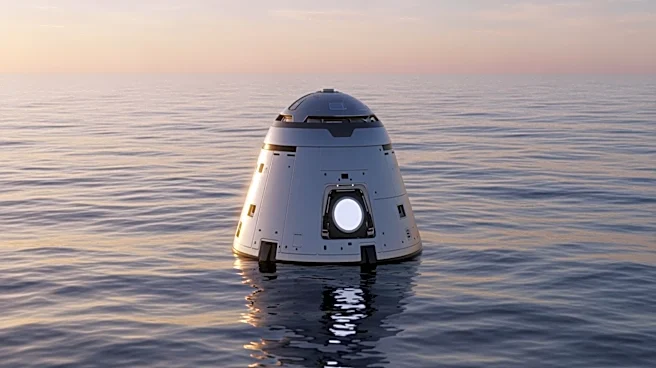
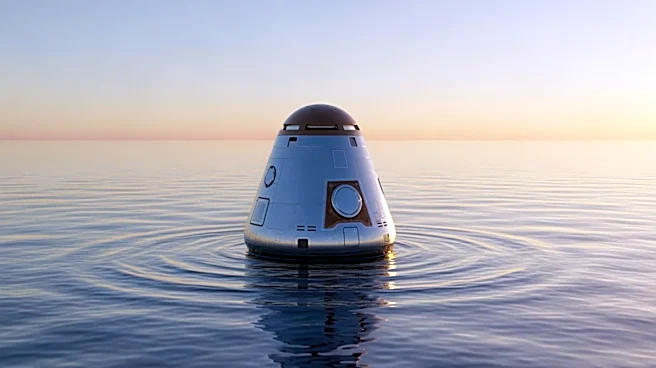
consisting of NASA astronauts Reid Wiseman, Victor Glover, Christina Koch, and Canadian Space Agency's Jeremy Hansen, traveled in the Orion capsule. After re-entering Earth's atmosphere at speeds exceeding 24,000 miles per hour and enduring temperatures up to 5,000 degrees Fahrenheit, the capsule splashed down in the Pacific Ocean. The astronauts were then extracted and transported to a U.S. Navy recovery ship. The mission was celebrated for its technical achievements and the strong camaraderie among the crew, which was widely shared on social media.
Why It's Important?
The successful completion of the Artemis 2 mission is a significant milestone for NASA's Artemis program, which aims to return humans to the moon and eventually send astronauts to Mars. This mission not only demonstrated the capabilities of the Orion spacecraft and the effectiveness of NASA's current lunar exploration strategies but also set the stage for future missions, including Artemis 3, which will aim to land astronauts on the lunar surface. The mission's success reinforces the United States' leadership in space exploration and has implications for international collaboration, as seen with the involvement of the Canadian Space Agency. The mission also inspires public interest and support for space exploration, highlighting the potential for scientific discovery and technological advancement.
What's Next?
Following the success of Artemis 2, NASA is preparing for Artemis 3, which will aim to land astronauts on the moon. This mission is a critical step toward establishing a sustainable human presence on the lunar surface and will involve further testing of the Orion spacecraft and other technologies. NASA's long-term goals include using the moon as a stepping stone for future missions to Mars. The success of Artemis 2 will likely influence funding and policy decisions related to space exploration, as well as foster international partnerships. The mission's achievements will also contribute to the development of new technologies and inspire the next generation of scientists and engineers.