


What's Happening?
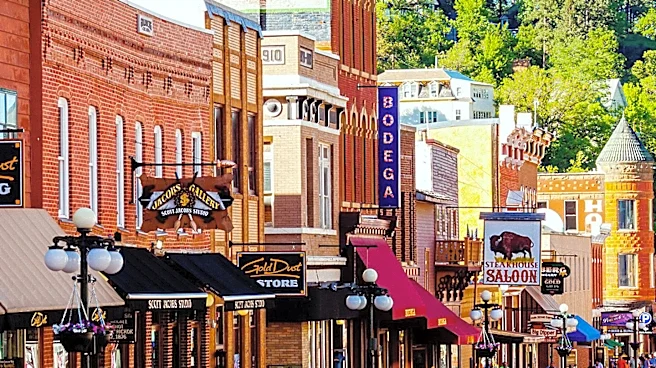
The South Dakota Department of Social Services (DSS) has submitted a request to the U.S. Department of Agriculture (USDA) to prohibit the use of government food assistance for purchasing soft drinks. This action follows a law passed by the South Dakota Legislature
and approved by the governor earlier this year, mandating the DSS to seek such a waiver by August 31. The new law defines a 'soft drink' as a nonalcoholic beverage containing natural or artificial sweeteners, with exemptions for milk, milk substitutes, and some juices. Approximately 72,000 people, or 36,500 households, in South Dakota currently receive food assistance benefits. The DSS stated that the ban would commence six months after federal approval, but did not address a recent June court decision that vacated similar bans in five other states, causing some states like North Dakota and South Carolina to delay their own restrictions.
Why It's Important?
This initiative is important because it represents South Dakota's effort to influence the nutritional choices of food assistance recipients, aiming to promote healthier eating habits and ensure responsible stewardship of taxpayer dollars, as stated by Sioux Falls Republican Rep. Taylor Rehfeldt. However, the move is complicated by a federal court ruling that struck down similar bans in other states, citing the USDA's failure to follow proper procedures for public notice and comment. This legal precedent creates uncertainty for South Dakota's request and highlights a broader debate about the scope of government intervention in food assistance programs. Opponents, including grocery store owner Rep. Liz May, argue that such bans create administrative burdens for retailers and may not achieve desired nutritional outcomes, suggesting that rewarding nutritious choices might be more effective than punishing certain food selections. The implementation of such a ban would also incur significant administrative costs for the state, estimated at $310,000 in the first two years and $250,000 annually thereafter.
What's Next?
The USDA will now review South Dakota's request for a waiver to ban soft drink purchases with food assistance. Given the recent federal court decision that vacated similar bans in five states due to procedural issues, the USDA will likely need to carefully consider its response to ensure compliance with legal requirements, including publishing notice of the restrictions and accepting public comment. States like North Dakota and South Carolina have already postponed their restrictions until November 1 to allow the USDA to address these concerns. South Dakota's ban, if approved, would begin six months after federal authorization. The outcome of this request will set a precedent for other states considering similar restrictions and will be closely watched by public health advocates, food assistance recipients, and retailers. The debate over the effectiveness and fairness of such bans is expected to continue.
Beyond the Headlines
Beyond the immediate policy implications, this situation touches upon deeper ethical and societal questions regarding individual autonomy versus public health objectives. While proponents argue for the state's role in promoting healthier lifestyles and optimizing public funds, critics contend that such restrictions can be paternalistic and disproportionately affect low-income individuals, potentially stigmatizing them. The administrative complexities and costs associated with implementing and enforcing such bans also raise questions about their overall efficiency and impact. Furthermore, the varying approaches by states and the federal court's intervention highlight the lack of a unified national policy on what constitutes appropriate purchases with food assistance, leading to a patchwork of regulations that can be confusing for both recipients and retailers. This ongoing tension reflects broader debates about welfare policy, personal responsibility, and the role of government in public health.